December 4, 2025
10 Affordable Interior Design Ideas for 2025
Discover 10 actionable and affordable interior design ideas to transform your home on a budget. Get tips on paint, furniture, decor, and more.
Achieving a beautifully designed home often feels like a luxury reserved for those with unlimited budgets. However, creating a space that is stylish, personal, and inviting doesn't require a complete overhaul or high-end spending. The secret lies in strategic, creative updates that deliver maximum impact for minimal cost. True interior design excellence is not about the price tag of individual items, but about the thoughtful curation of a cohesive and functional environment. This guide is built on that principle.
This comprehensive listicle explores 10 proven and affordable interior design ideas that empower you to refresh your living spaces, from clever paint tricks to sourcing unique secondhand treasures. We will provide actionable steps, realistic cost estimates, and practical tips to help you transform your vision into a tangible reality. Each idea is designed to be accessible, whether you're a seasoned DIYer or a beginner looking to make a significant style impact without significant financial commitment. The focus is on smart, targeted enhancements that elevate your home's aesthetic and functionality.
Before you start purchasing supplies or moving furniture, consider using a tool like AiRoom to visualize these changes. By uploading a photo of your current space, you can digitally experiment with different paint colors, furniture layouts, and decor styles. This powerful step allows you to test concepts risk-free, ensuring your budget-friendly updates align perfectly with your aesthetic goals before you even pick up a paintbrush or visit a thrift store. This guide provides the inspiration; visualization tools give you the confidence to execute.
1. DIY Upcycling and Repurposing Furniture
One of the most impactful and creative affordable interior design ideas is to breathe new life into old or discarded items through upcycling. This approach involves transforming furniture and decor you already own, or pieces sourced from thrift stores, into stylish, functional additions for your home. It's a sustainable practice that not only saves money but also injects unique character and a personal story into your space.
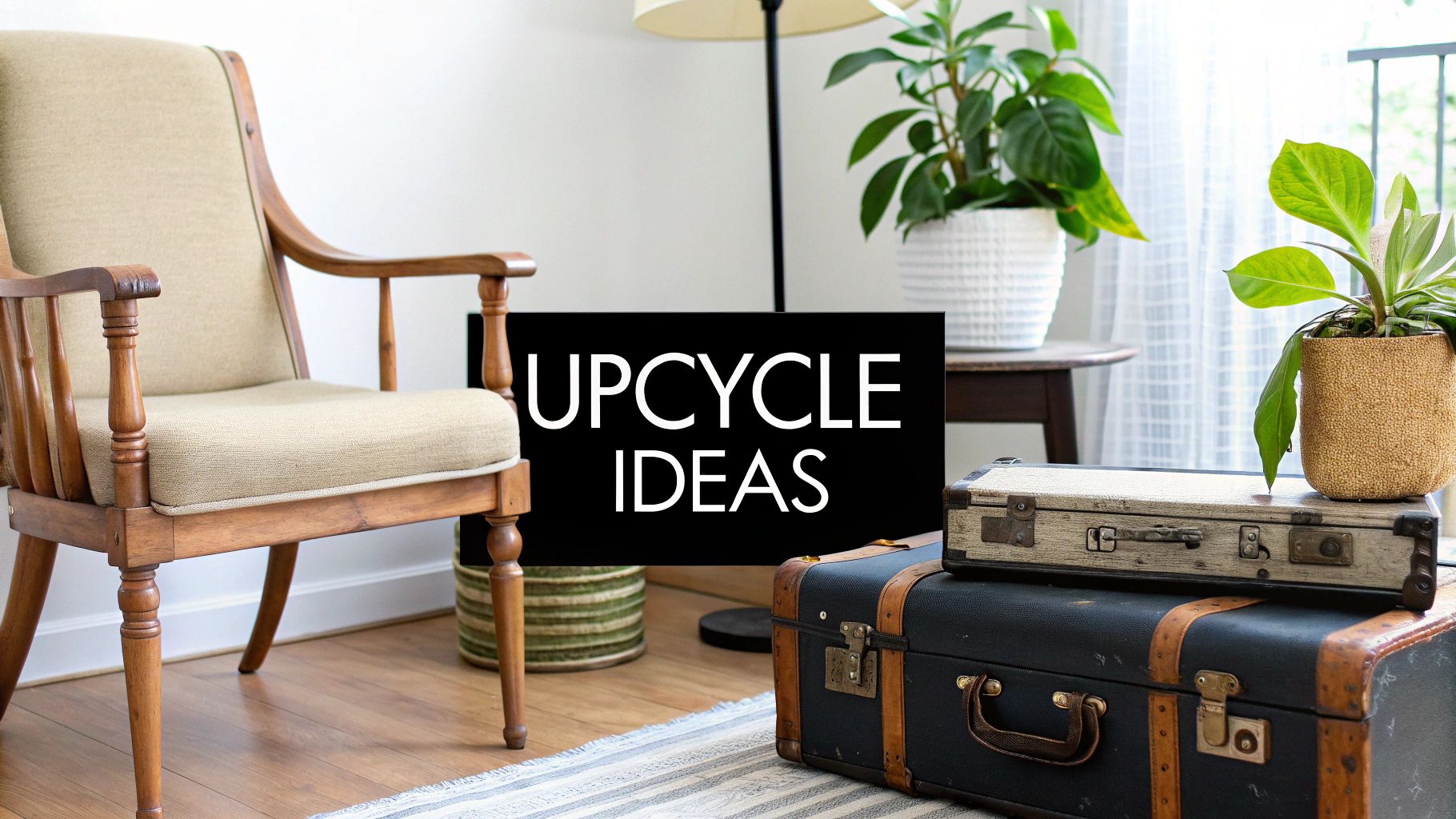
Upcycling allows you to create bespoke furniture that perfectly fits your aesthetic without the high cost of custom-made pieces. The key is to see the potential in an item's structure and form, rather than its current finish. A dated wooden dresser, for instance, can become a modern centerpiece with a fresh coat of paint, new hardware, and some creative stenciling.
Actionable Upcycling Projects
- Chairs and Stools: A mismatched set of wooden dining chairs can be unified with a bold, uniform color. Try a high-gloss black for a dramatic effect or soft pastels for a shabby-chic vibe.
- Suitcase Tables: Vintage suitcases, often found at flea markets, can be stacked to create a charming side table. For more stability, attach hairpin legs to a single, sturdy suitcase for a mid-century modern look.
- Door Headboards: An old, solid wood door turned horizontally makes a stunning and rustic headboard. Sand it down and either seal the natural wood or paint it to match your bedroom's color scheme.
Tips for Success
To get started, begin with simple projects that build confidence, such as painting a small side table or replacing drawer pulls. Invest in quality supplies, especially primer and paint, as they are crucial for a durable and professional-looking finish. Before you begin, watch tutorials to understand the best techniques for sanding, painting, and sealing different materials. This preparation ensures your upcycled piece not only looks great but also stands the test of time, making it a cornerstone of your affordable interior design strategy.
2. Paint and Accent Walls
Perhaps the most transformative yet affordable interior design idea is the strategic use of paint. A fresh coat of paint can instantly redefine a room, altering its mood, perceived size, and overall ambiance for a minimal investment. Beyond painting all four walls, creating an accent or feature wall introduces a powerful focal point, adding depth and personality without overwhelming the space or your budget.
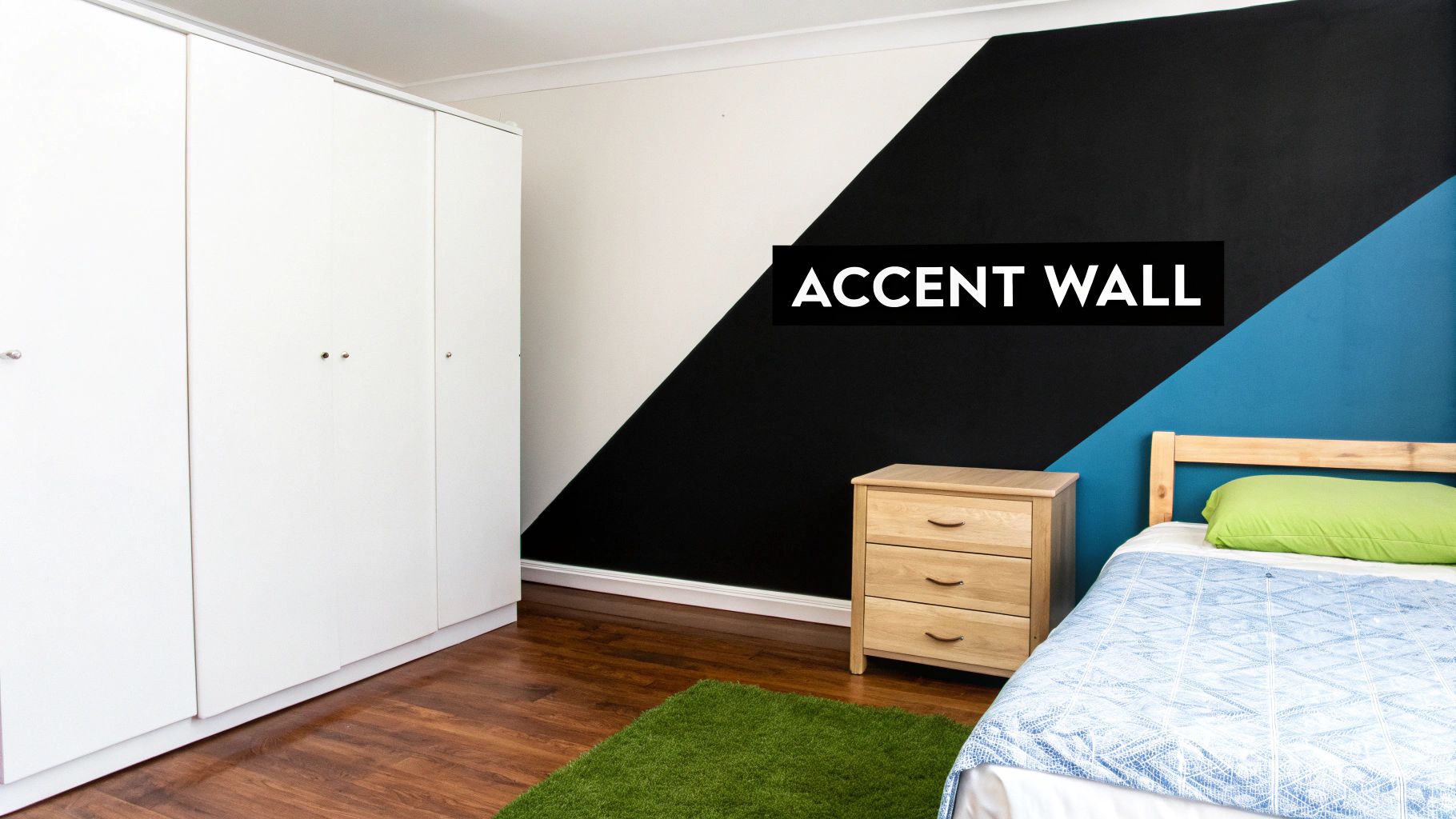
This approach allows you to experiment with bold colors or patterns that might be too intense for an entire room. An accent wall acts as a canvas, highlighting architectural features, framing furniture, or showcasing artwork. It’s a designer-approved trick to create a high-impact look that feels intentional and well-curated, making it a cornerstone of accessible home styling.
High-Impact Paint Projects
- Bedroom Serenity: A deep sage green or navy blue accent wall behind the bed can create a calming, cocoon-like atmosphere that promotes relaxation.
- Living Room Focus: Paint the wall behind your sofa or television a rich terracotta or charcoal gray to anchor the seating area and make it feel more cohesive and inviting.
- Creative Two-Tones: For a modern and playful twist, paint the bottom half of a wall in one color and leave the top half white or a lighter neutral. This technique can add visual interest to hallways or children's rooms.
Tips for Success
Proper preparation is the key to a professional-looking paint job. Always clean your walls, use painter's tape for crisp lines, and apply a quality primer for better coverage and color accuracy. Test paint samples directly on the wall and observe them at different times of day to see how the light affects the color. For a deeper dive into making your accent wall stand out, explore these expert tips on painting a feature wall.
3. Strategic Use of Mirrors
One of the most effective and affordable interior design ideas is the strategic placement of mirrors. Beyond their practical function, mirrors are powerful design tools that can dramatically transform a space by creating the illusion of depth, amplifying natural light, and making rooms feel significantly larger and more open. This technique is especially valuable in smaller homes, apartments, or any room that lacks abundant sunlight.
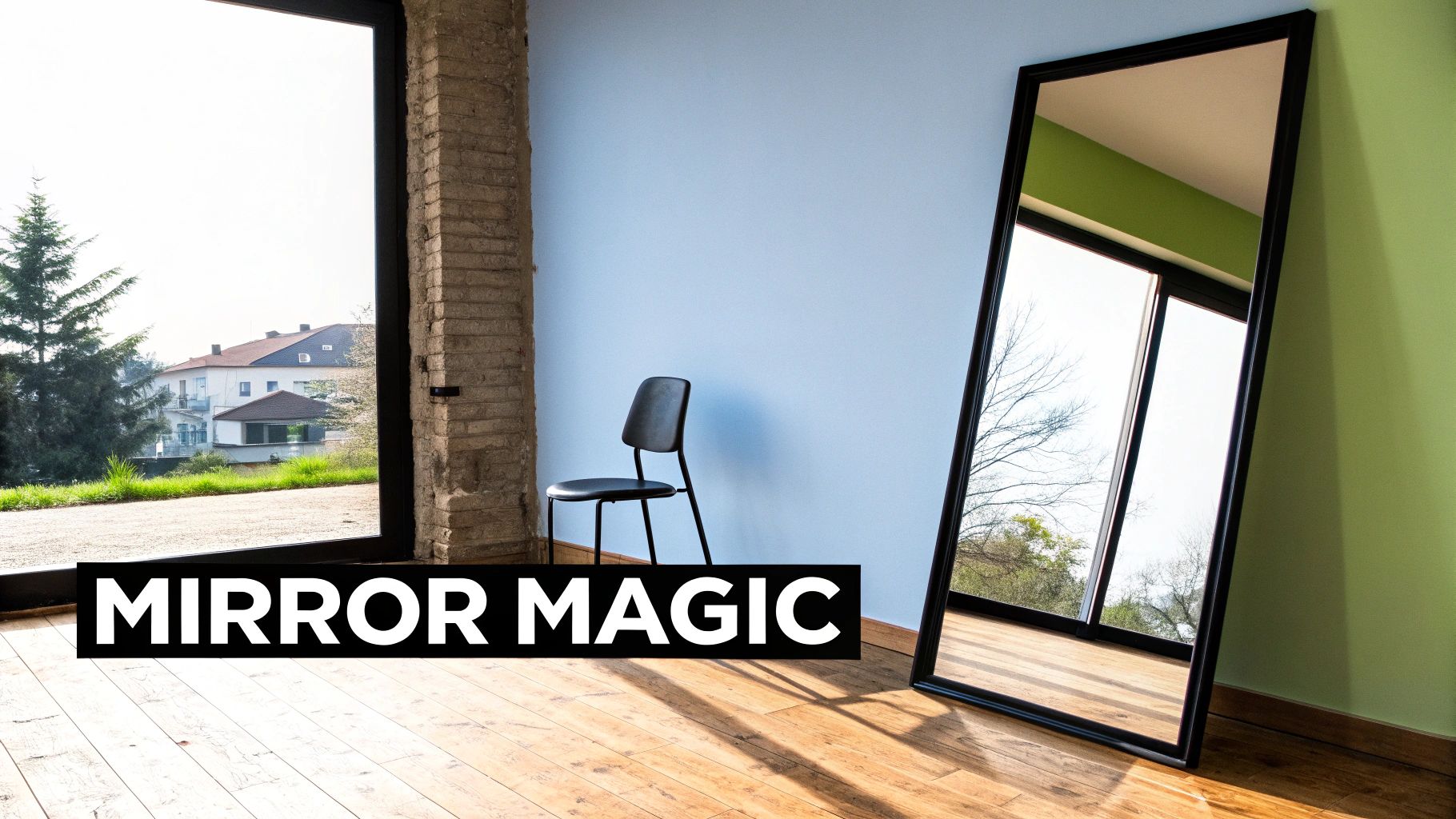
Mirrors serve as functional art, reflecting your home's best features and adding a touch of elegance without a hefty price tag. A well-placed mirror can double the visual impact of a light fixture or a beautiful view, essentially borrowing light and scenery from outside. By thoughtfully considering placement, you can solve common design problems like narrow hallways or dark corners, turning them into brighter, more inviting areas.
Actionable Mirror Placement Ideas
- Reflect a Window: Position a large mirror on the wall opposite a window. This will capture the maximum amount of natural light and reflect the outdoor view, making the room feel brighter and more connected to the outside.
- Create a Gallery Wall: Group several smaller mirrors of varying shapes, sizes, and frame styles together on one wall. This creates an artistic focal point that adds texture and reflects light in interesting, fragmented ways.
- Lean, Don't Hang: For a relaxed and modern feel, lean a large, full-length mirror against a wall. This approach is perfect for renters as it requires no drilling and offers the flexibility to move the mirror easily.
- Expand Small Spaces: Place a mirror at the end of a narrow hallway or in a small entryway. The reflection creates an illusion of continuity, making the space feel less confined and more expansive.
Tips for Success
To maximize the benefits, always place mirrors opposite a light source, whether it's a window or a statement lamp, to double the brightness. Don't be afraid to mix and match styles; an ornate, vintage mirror can become a stunning statement piece in an otherwise modern room. Remember that mirrors reflect everything, so ensure the view it captures is one you want to see twice. This simple yet impactful strategy is a cornerstone of smart, affordable interior design.
4. Thrift Store and Secondhand Shopping
Sourcing unique pieces from thrift stores and secondhand markets is a cornerstone of affordable interior design ideas. This approach involves hunting for furniture, decor, and accessories from places like Goodwill, estate sales, and online marketplaces. It allows you to acquire high-quality, often vintage, items at a fraction of their retail price, infusing your home with character and a sense of history that new items often lack.
Secondhand shopping is more than just a cost-saving measure; it's a treasure hunt for one-of-a-kind finds that prevent your space from looking like a catalog showroom. A solid wood dresser from an estate sale or a quirky lamp from a local antique mall can become an instant focal point. This method champions sustainability by giving pre-loved items a new home, reducing waste while adding curated charm to your decor.
Actionable Secondhand Sourcing
- Online Marketplaces: Regularly browse platforms like Facebook Marketplace and Craigslist for local deals. Use specific keywords like "solid wood" or "mid-century" to filter for quality pieces.
- Antique Malls and Flea Markets: Dedicate a weekend to exploring local antique malls or flea markets. These venues often house unique decor, art, and furniture from various decades that you won't find anywhere else.
- Thrift Store Chains: Visit stores like Goodwill and Salvation Army, especially on weekday mornings when new inventory is often put out. Look beyond the surface; an item with good "bones" can be easily transformed.
Tips for Success
To master the art of thrifting, consistency is key. Visit your favorite spots often, as inventory changes daily. Always inspect items thoroughly for structural integrity, pests, or damage before purchasing. Don't be afraid to negotiate prices, especially at flea markets or estate sales. Finally, mix your thrifted treasures with new pieces to create a balanced, modern look that feels collected and personal, making it a powerful strategy for affordable interior design.
5. DIY Wall Decor and Art
Blank walls can make a space feel unfinished, but filling them with expensive, store-bought art isn't the only solution. Creating your own wall decor is a powerful and affordable interior design idea that infuses your home with personality and unique style. This approach involves designing and making your own pieces, from digital prints and abstract paintings to fabric hangings, allowing for complete creative control without the high price tag of gallery art.
DIY art turns your walls into a personal statement. Instead of generic prints, you can display meaningful photographs, your favorite quotes, or abstract color palettes that perfectly match your decor. The beauty of this method lies in its accessibility; with simple tools and a bit of creativity, you can produce high-impact pieces that look like they were custom-commissioned for your space.
Actionable Wall Decor Projects
- Printable Art: Use free tools like Canva to design simple typographic prints or abstract graphics. Print them on quality cardstock at home or at an affordable print shop and place them in inexpensive frames from thrift or dollar stores.
- Abstract Canvas Painting: Purchase a blank canvas and a few tubes of acrylic paint in your desired color scheme. You don't need to be an artist to create a beautiful abstract piece; focus on textures, color blending, and simple geometric shapes for a modern look.
- Framed Fabric or Wallpaper: A great way to add pattern and texture is to frame a beautiful piece of remnant fabric or a sample of bold wallpaper. This creates a visually interesting focal point for a fraction of the cost of a large art print.
Tips for Success
Start by planning a gallery wall layout on the floor before you begin hammering nails. Mix and match different frame sizes, colors, and styles for a dynamic, curated effect. Incorporate personal photographs alongside your DIY creations to tell a richer story. For a cohesive look, stick to a consistent color palette across all the pieces on a single wall. This thoughtful approach ensures your DIY decor elevates your home, making it a standout example of smart and affordable interior design.
6. Maximizing Natural Light
One of the most transformative yet entirely free affordable interior design ideas is to maximize the natural light in your home. This approach focuses on optimizing sunlight from windows and other sources to make any space feel larger, brighter, and more inviting. By treating light as a primary design element, you can significantly enhance your home's ambiance and reduce the need for artificial lighting without spending a dime.
Popularized by Scandinavian and minimalist design philosophies, maximizing natural light involves strategic adjustments to your window treatments, furniture layout, and reflective surfaces. The goal is to remove obstructions and create clear pathways for sunlight to penetrate deep into a room. This simple, cost-effective strategy can dramatically improve your mood and highlight your home's best features.
Actionable Light-Enhancing Techniques
- Strategic Mirror Placement: Position a large mirror on the wall opposite your main window. It will capture the incoming light and bounce it back into the room, effectively doubling the brightness and creating an illusion of greater depth.
- Swap Heavy Drapes for Sheer Curtains: Replace bulky, dark curtains with lightweight, sheer, or semi-sheer fabrics. These options provide privacy while still allowing soft, diffused light to filter through, creating a warm and airy atmosphere.
- Rearrange Furniture Layout: Pull sofas, bookshelves, and other large furniture pieces away from windows. Blocking a window, even partially, can cast shadows and make a room feel cramped. Aim for an open layout that allows light to travel unobstructed.
Tips for Success
To get the best results, start by thoroughly cleaning your windows inside and out, as grime can significantly reduce the amount of light that passes through. Choose light paint colors like off-white, soft gray, or pale pastels for your walls and ceiling to reflect sunlight more effectively. Finally, consider incorporating glossy finishes on furniture or decor items, as these surfaces also help bounce light around the room, making it a cornerstone of any effective and affordable interior design plan.
7. Plants and Living Elements
One of the simplest yet most transformative affordable interior design ideas is to introduce live plants into your home. Greenery adds vibrant color, organic texture, and a sense of vitality that can instantly elevate a room's atmosphere. Beyond aesthetics, plants improve air quality and create a calming connection to the natural world, making your space feel healthier and more inviting without a significant financial investment.
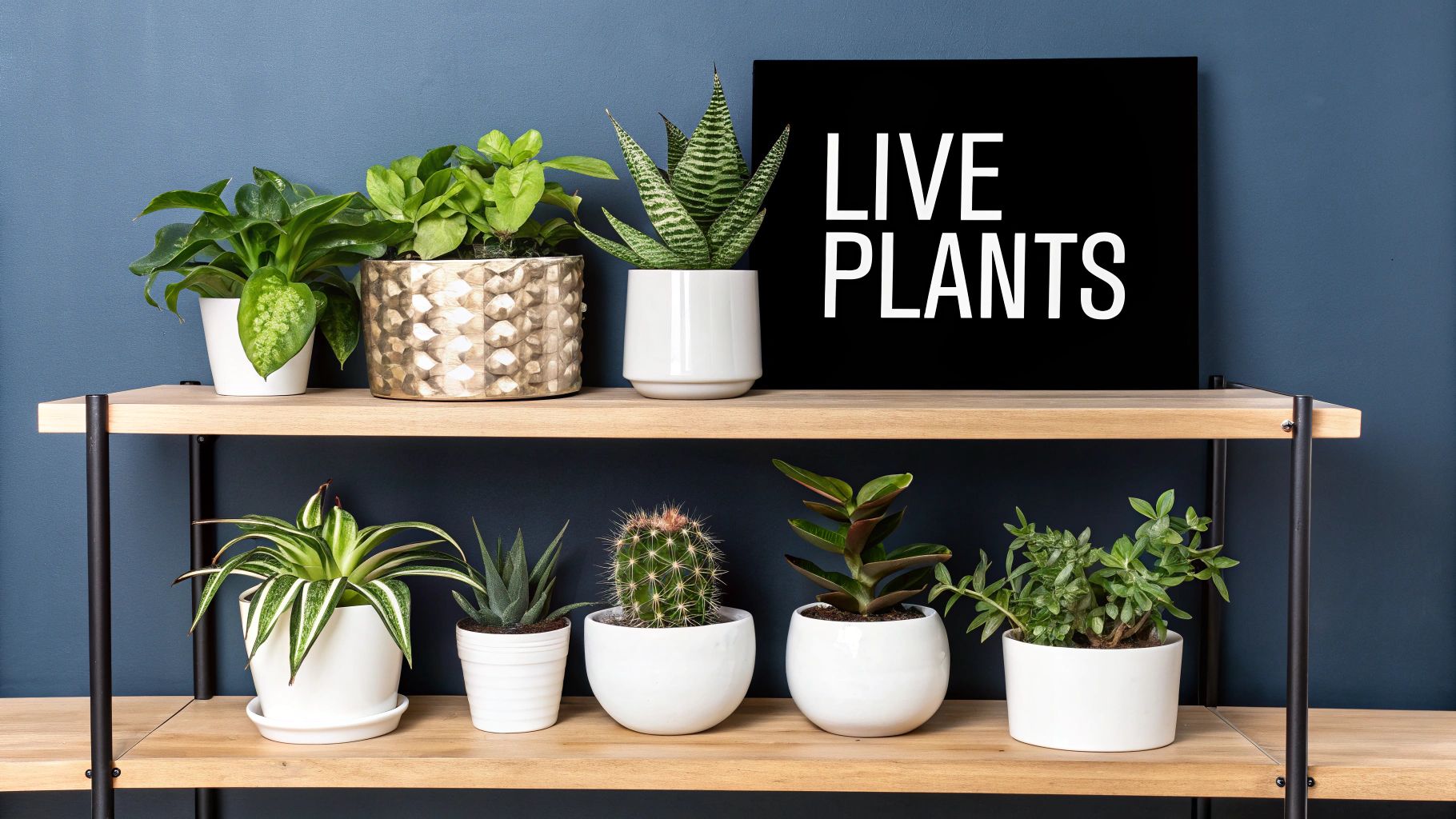
Incorporating plants is a versatile strategy that works in any design style, from minimalist to bohemian. You can start with a single statement plant or create a lush indoor jungle over time. The key is to choose plants that suit your home's light conditions and your level of commitment to care, ensuring they thrive and continue to beautify your space. This approach allows you to decorate dynamically, as plants grow and change.
Actionable Plant Styling Projects
- Lush Corner Grouping: Create a focal point by clustering several plants of varying heights and leaf shapes in an empty corner. Use a large snake plant or monstera as an anchor, complemented by smaller potted plants like a ZZ plant or pothos.
- Hanging Greenery: Utilize vertical space by hanging trailing plants like philodendrons or spider plants from the ceiling or high shelves. This draws the eye upward and adds dimension, especially in smaller rooms.
- Shelf Displays: Arrange a collection of small succulents and cacti on a floating shelf or bookcase. Mix and match different pots and containers for an eclectic, personalized look that requires minimal watering.
Tips for Success
Start with low-maintenance, "hard-to-kill" plants like snake plants, pothos, or ZZ plants to build your confidence. To keep costs down, propagate new plants from cuttings of existing ones, join local plant swap groups, or repurpose items like mugs and tins as unique planters (just be sure to add drainage holes). Always research the specific light and water requirements for each plant before buying to ensure it will flourish in its designated spot, making this a truly sustainable and affordable interior design idea.
8. Affordable Textiles and Soft Furnishings
One of the quickest and most cost-effective affordable interior design ideas is to leverage textiles and soft furnishings. This strategy involves using items like throw pillows, blankets, rugs, and curtains to inject color, texture, and a sense of comfort into a room. Because these elements are easily interchangeable, they offer a low-commitment way to dramatically alter a room's atmosphere, making it simple to update your space seasonally or whenever you crave a new look.
The power of textiles lies in their ability to soften hard surfaces, absorb sound, and introduce new patterns and palettes without requiring a major overhaul. A neutral sofa can be completely transformed with a few vibrant cushions and a cozy throw blanket. Similarly, a bland room can be anchored and defined by an affordable, stylish area rug. This approach is all about layering and personalizing your space with tactile elements.
Actionable Textile Projects
- Pillow and Cushion Covers: Instead of buying new pillows, simply purchase new covers. This saves money and storage space. Swap out velvet and wool covers in winter for light linen or cotton in summer.
- Layered Rugs: Place a smaller, patterned rug (like a jute or colorful vintage-style one) over a larger, neutral rug. This adds visual depth and is cheaper than buying one very large, expensive rug.
- Lightweight Curtains: Sheer or light-filtering curtains are often more affordable than heavy drapes and can make a room feel brighter and more open. Hang them high and wide around the window frame to create an illusion of height.
Tips for Success
Focus your search on budget-friendly retailers like IKEA, Target, and H&M Home, which offer trendy designs at low prices. To create a cohesive look, start with a neutral base for large items like your sofa and bring in color and pattern through smaller accents. Don't be afraid to mix different textures, such as a chunky knit blanket with smooth silk pillows, to create a rich, layered aesthetic. This is a key principle in many aesthetic room decoration ideas that rely on comfort and visual interest. By rotating these items seasonally, you can keep your home feeling fresh and current all year round.
9. Functional Room Organization and Storage
One of the most transformative yet affordable interior design ideas is to master functional room organization and storage. This approach goes beyond simple tidying; it involves strategically maximizing space efficiency to make rooms feel larger, calmer, and more intentional. By reducing visual clutter and utilizing every inch of your home, you can enhance its aesthetic and functionality without spending a fortune on new furniture.
Effective organization creates a sense of order that is both visually pleasing and practical. It eliminates the need for bulky, unnecessary furniture by making smarter use of the space you already have, especially vertical and under-utilized areas. The goal is to find storage solutions that not only hide clutter but also contribute to your home's overall design theme.
Actionable Organization Projects
- Vertical Wall Space: Install floating shelves in a living room to display books and decor, or add a tall, narrow shelving unit to a bathroom corner for towels and toiletries. This draws the eye upward and frees up floor space.
- Hidden Nooks: Utilize under-bed storage containers with wheels for seasonal clothing or extra linens. In the kitchen, use over-the-door organizers inside pantry doors for spices and small items.
- Aesthetic Grouping: Use woven baskets on open shelves or in living room corners to stylishly conceal items like toys, blankets, or magazines. Grouping similar items in matching containers creates a cohesive and organized look. You can even get creative with existing spaces; find out how to convert a closet into a functional bookcase.
Tips for Success
Before buying any containers, perform a thorough audit of your belongings and declutter first. This ensures you only purchase what you truly need. Invest in drawer dividers for kitchens and dressers to create designated spots for every item. Finally, implement a "one in, one out" policy to maintain order long-term. By choosing storage that is both beautiful and functional, you create a home that feels both spacious and serene, making it a powerful tool in your affordable interior design arsenal.
10. Budget-Friendly Lighting Solutions
One of the most transformative yet often overlooked affordable interior design ideas is the strategic use of lighting. The right lighting can dramatically alter a room's mood, highlight its best features, and even make a space feel larger and more inviting. Fortunately, achieving a high-end lighting scheme doesn't require expensive fixtures or complex electrical work; many budget-friendly solutions offer maximum impact for minimal investment.
Effective lighting design is about layering different types of light: ambient (overall illumination), task (focused light for activities), and accent (to highlight decor). By combining various affordable sources, you can create a dynamic and functional atmosphere. This approach moves beyond a single, harsh overhead light to a layered look that adds depth, warmth, and visual interest to your home.
Actionable Lighting Projects
- LED Strip Lights: Inexpensive and versatile, these can be placed under kitchen cabinets for task lighting, behind a headboard for a soft glow, or along the bottom of a floating shelf to highlight decor.
- Plug-In Pendant or Sconce Lights: Avoid the cost of an electrician by using stylish plug-in fixtures. Hang a single pendant light over a reading nook or use a pair of plug-in sconces to frame a bed or sofa.
- Thrifted Lamps: Secondhand stores are treasure troves for unique floor and table lamps. A quick coat of spray paint on the base and a new, modern lampshade can completely transform a dated find into a custom piece.
- String Lights: For a touch of whimsy and cozy ambient light, drape string lights (often called fairy lights) around a mirror, along a curtain rod, or within a large glass vase.
Tips for Success
Start by replacing all your old incandescent bulbs with energy-efficient LEDs; they last longer and use significantly less electricity, saving you money over time. Pay attention to light temperature: use warm light (around 2700K) in living rooms and bedrooms to create a relaxing, cozy vibe, and cool light (4000K+) in kitchens and home offices for better focus and visibility. Installing dimmer switches is another fantastic, low-cost upgrade that provides complete control over the ambiance, allowing you to transition a room's feel from bright and functional to intimate and soft with ease.
Affordable Interior Design Ideas: 10-Point Comparison
| Item | 🔄 Implementation complexity | ⚡ Resource requirements | 📊 Expected outcomes | 💡 Ideal use cases | ⭐ Key advantages |
|---|---|---|---|---|---|
| DIY Upcycling and Repurposing Furniture | High — hands‑on skills, refinishing time | Medium — basic tools, paints, hardware; time investment | ⭐⭐⭐⭐ — unique custom pieces; 50–80% cost savings | Sustainable refreshes; custom statement pieces | Custom, eco‑friendly, cost‑saving |
| Paint and Accent Walls | Low — simple DIY but needs prep | Low — paint, brushes, tape; 1–2 days | ⭐⭐⭐⭐ — high visual impact; $100–300 savings | Quick room refreshes; create focal points | Fast, affordable, reversible |
| Strategic Use of Mirrors | Low — simple placement/hanging | Low — purchase or thrift mirrors; occasional heavy lift | ⭐⭐⭐ — increases perceived space & light; $50–200 savings | Small/apartment rooms; low‑light spaces | Brightens, enlarges visually, versatile |
| Thrift Store and Secondhand Shopping | Low — time‑intensive searching | Low cost (but variable) — transport, possible repairs | ⭐⭐⭐⭐ — unique finds; 60–85% savings vs retail | Sourcing vintage character; budget furnishing | Cost‑effective, sustainable, one‑of‑a‑kind |
| DIY Wall Decor and Art | Low–Medium — skill varies by project | Low — paper, frames, canvas, printing costs | ⭐⭐⭐ — personalized focal art; $100–500+ depending on scope | Gallery walls; personalizing rental spaces | Highly customizable; low material cost |
| Maximizing Natural Light | Low — rearrangement and simple changes | Very low — cleaning, sheer curtains, possible film | ⭐⭐⭐⭐ — brighter, larger feel; reduces lighting needs ($50–300) | Small/dim rooms; mood and wellbeing upgrades | Free impact, energy reduction, improves ambiance |
| Plants and Living Elements | Low — ongoing care and maintenance | Low — starter plants, pots, soil; occasional replacements | ⭐⭐⭐ — adds life, texture, air benefits; $100–300 room impact | Biophilic styling; mood and air‑quality focus | Affordable visual interest; health benefits |
| Affordable Textiles and Soft Furnishings | Low — easy swaps and layering | Low–Medium — pillows, rugs, curtains from budget retailers | ⭐⭐⭐ — changes warmth and style; $100–400 refresh cost | Seasonal updates; soften and color rooms | Flexible, easy to update, cozy effect |
| Functional Room Organization and Storage | Medium — planning and habit changes | Low–Medium — shelves, baskets, organizers | ⭐⭐⭐⭐ — reduces clutter; saves $200–600 vs new furniture | Small spaces; decluttering and space optimization | Space‑saving, improves function, scalable |
| Budget-Friendly Lighting Solutions | Low–Medium — placement; possible electrical work | Low–Medium — LED bulbs, fixtures, dimmers, thrift finds | ⭐⭐⭐⭐ — improves mood and function; $150–400 update cost | Ambiance upgrades; task and layered lighting | High impact, energy efficient, versatile |
Your Guide to a Beautifully Designed Home on a Budget
Creating a home that feels stylish, personal, and thoughtfully designed is not a privilege reserved for those with unlimited funds. As we have explored throughout this guide, the most impactful transformations often stem from creativity, resourcefulness, and a clear vision rather than a large budget. The journey from a blank or uninspired space to a beautiful home is paved with smart choices and strategic updates. These affordable interior design ideas empower you to take control of your environment, proving that great design is truly accessible to everyone.
Key Takeaways: From Inspiration to Implementation
The core principle connecting all these ideas is the pursuit of high-impact, low-cost solutions. Instead of thinking about a complete overhaul, focus on the powerful, incremental changes that collectively redefine a space.
Let's recap the foundational strategies we covered:
- Embrace the Pre-Loved: Thrift stores and secondhand markets are not just for saving money; they are treasure troves of unique pieces with character and history. A vintage armchair or a repurposed dresser can become a stunning focal point that new, mass-produced items simply cannot replicate.
- Harness the Power of Paint: Never underestimate what a fresh coat of paint can do. Whether it's creating a dramatic accent wall, refreshing old furniture, or brightening a dim room, paint offers the highest return on investment for any design project.
- Manipulate Light and Space: Strategic placement of mirrors, maximizing natural light, and layering affordable lighting solutions are professional tricks that cost very little. These techniques can make small rooms feel larger, dark corners feel welcoming, and the entire home feel more open and airy.
- Focus on a Cohesive Vision: The most important takeaway is that a beautiful home is a cohesive one. You don't need expensive items to achieve this. A consistent color palette, repeated textures, and a clear organizational system tie everything together, making even the most budget-friendly elements look intentional and chic.
Your Action Plan for an Affordable Home Makeover
Feeling inspired is the first step, but taking action is what brings your vision to life. The beauty of these affordable interior design ideas is that you can start small and build momentum. You don’t need to tackle everything at once.
Begin by identifying one or two high-priority areas. Is your living room lacking personality? Start by hunting for unique textiles and DIYing some wall art. Does your bedroom feel cluttered and chaotic? Focus on functional organization and storage solutions first. By breaking down your project into manageable tasks, you avoid overwhelm and can enjoy the process of watching your space evolve. Remember, the goal is progress, not immediate perfection. Each small change, from adding a new plant to swapping out old cushion covers, is a step toward creating a home you love. This approach makes the entire process more enjoyable and, most importantly, sustainable for your wallet.
Embracing these concepts is about more than just saving money. It is about developing your personal style, learning new skills through DIY projects, and creating a space that is a true reflection of you. It's about making conscious choices that are both economically and environmentally sound. This mindful approach to design results in a home that not only looks good but feels good, too. You have the knowledge and the tools to begin this exciting journey today.
Ready to visualize these affordable interior design ideas before you commit? Take the guesswork out of your design process with AiRoom. Upload a photo of your space, select your desired style, and let our powerful AI generate stunning, realistic previews of your room's potential, helping you design with confidence and precision. Visit AiRoom to start your transformation today!