December 1, 2025
canopy bed small bedroom: Cozy ideas for compact spaces
Explore how a canopy bed small bedroom can transform a cramped space with smart sizing, styling tips, and layout ideas.

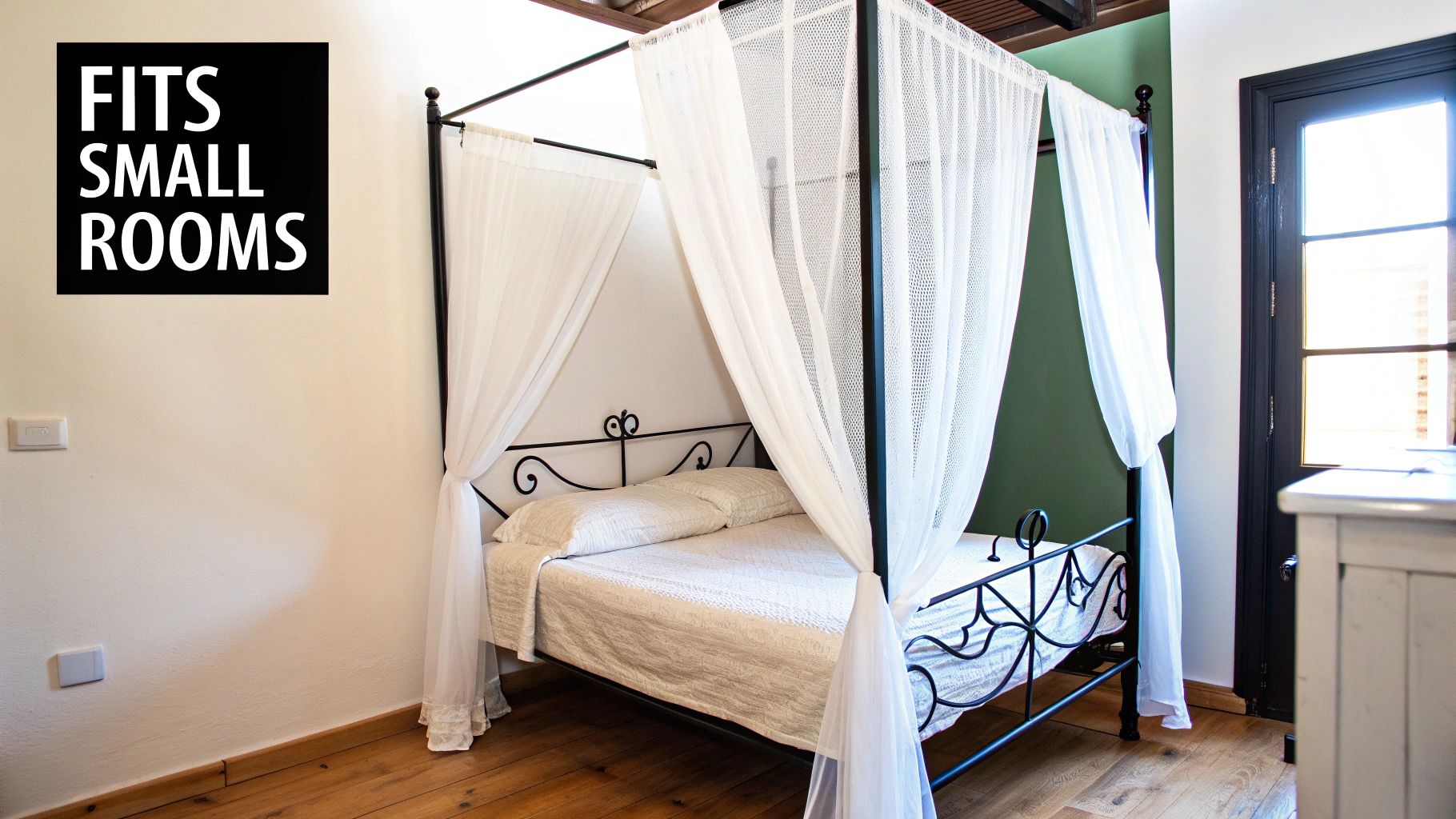
It's a common design myth that canopy beds are only for huge, sprawling bedrooms. Let's bust that right now. A canopy bed in a small bedroom isn't just possible—it can be a game-changer, turning a cramped space into a stylish, well-defined sanctuary.
The trick is to think vertically. Instead of a heavy, overpowering frame that eats up precious floor space, you want a sleek, modern design. A slender frame draws the eye upward, creating an illusion of height and making the whole room feel bigger.
Yes, You Can Fit a Canopy Bed in a Small Bedroom
Forget the old-school, bulky four-posters of the past. Today's canopy beds are all about minimalist lines and airy designs that create a room-within-a-room without overwhelming it. It’s less about filling the space and more about framing it.
This shift isn't just a niche trend; it's a growing market. The demand for modern canopy beds is expected to surge to USD 3.154 billion by 2035, a massive leap from USD 1.51 billion in 2025. A big part of that growth is driven by smart, small-space living solutions for urban homes.
Core Principles for Success
To get this right, you really only need to stick to a few simple principles.
First up, go for a slender frame. Thin metal posts or light-colored wood are your best friends here. They create strong vertical lines that give the illusion of higher ceilings. Steer clear of anything chunky that adds visual bulk.
Next, measure for visual balance. The bed needs to feel like it belongs in the room, not like it was squeezed in. Make sure you leave enough "breathing room" on all sides so you can move around comfortably and the space doesn't feel cluttered.
And finally, if you're adding drapes, stick with light and airy fabrics. Sheer linen or voile in soft whites and creams will add a touch of romance without making the bed feel like a heavy, closed-off box. You don't even have to drape all four sides—sometimes, just dressing the corners is enough to get the look.
The goal is to transform the canopy bed from a potential space-killer into a strategic space-maker. By focusing on height and light, you can create a luxurious and inviting atmosphere that feels both cozy and open.
Ready to take the plunge? Before you commit, run through this quick checklist to make sure a canopy bed is the right move for your space.
Canopy Bed Feasibility Checklist
Use this quick checklist to see if a canopy bed is the right choice for your small bedroom.
| Consideration | Key Action | Why It Matters for Small Spaces |
|---|---|---|
| Ceiling Height | Measure from floor to ceiling. You'll need at least 12-18 inches of clearance above the canopy frame. | Too little space makes the room feel cramped and low. The goal is to create an illusion of height, not a claustrophobic box. |
| Room Dimensions | Measure your room's length and width. Ensure 24-30 inches of clear walking space around the bed. | This "breathing room" is non-negotiable. Without it, the room will feel cluttered and difficult to navigate. |
| Frame Style | Look for thin metal or light-wood frames with clean, simple lines. | Bulky, ornate frames add visual weight and make a small room feel even smaller. A slender profile keeps things light and airy. |
| Visual Weight | Choose a color that complements your room. Black can be dramatic, but white or metallics often feel lighter. | A dark, heavy frame can dominate the room. Lighter colors or reflective metals help the bed blend in while still making a statement. |
If you've checked these boxes, you're in a great position to make a canopy bed work beautifully.
Countless designers have pulled this off, turning tiny rooms into stunning retreats. For a little inspiration, it's always helpful to look at some before-and-after room makeovers to see just how powerful vertical design elements can be. With these guidelines, you can confidently find a canopy bed that elevates your small bedroom from ordinary to extraordinary.
Choosing the Right Frame to Maximize Space
Let's get one thing straight: you don't have to give up on your canopy bed dream just because your room is small. The trick isn't to avoid them, but to pick a frame that works with your space, not against it. The biggest thing to watch out for is "visual weight." A heavy, chunky wooden frame will instantly make a small room feel crowded.
Instead, think light and airy. A slim metal frame or one made from light-colored wood acts more like a sketch, outlining your sleep sanctuary without boxing it in. This simple switch in mindset is a game-changer. The slender vertical posts pull your eyes upward, which is a classic interior design trick for making ceilings feel higher. Suddenly, your cozy room feels more open and a lot less cramped.
Frame Material and Finish
The material you choose for your canopy bed for a small bedroom has a huge impact on the overall feel of the room. Each one brings a different vibe.
- Black Metal: A thin, black metal frame is perfect for a modern, almost graphic look. It's minimalist but bold, defining the bed with crisp lines that don't add any visual clutter.
- White or Light Wood: If you want subtlety, a white frame is your best friend. It has a knack for blending right into light-colored walls, creating an architectural detail that adds height without screaming for attention.
- Brass or Gold: For a touch of glamour, you can't go wrong with a metallic finish like brass. It reflects light around the room, making everything feel a bit brighter and more open, all while keeping that delicate, slim profile.
Got low ceilings? You can still pull this off. Just look for a simple four-poster bed that skips the upper crossbars. You get that lovely verticality without creating a "box" that makes the ceiling feel even lower.
Choosing a frame is like picking a font. A thick, bold font commands all the attention on a page. A thin, elegant one gets the message across without being overwhelming. Your canopy frame should be the elegant font of your bedroom.
Modern Frames for Modern Spaces
Thankfully, bed design has moved on from the heavy, ornate styles of the past. While traditional canopy beds once dominated the market, we're seeing much faster growth in modern, minimalist designs. This shift is a direct response to people wanting stylish, space-conscious furniture that fits into smaller homes. You can actually see how modern styles are taking over by looking at current market trends.
A great example is a frame with simple, cylindrical posts and clean joints—no fussy details. This type of design is incredibly versatile and works just as well in a Scandinavian-style room as it does in an industrial one. It makes the grand statement you want from a canopy bed but leaves behind the bulky, historical baggage. The whole point is to celebrate clean lines and negative space, which is the secret to making any small room look fantastic.
At the end of the day, the right frame makes your bed feel special without closing it off. If you stick to a slim profile, light materials, and a finish that works with your decor, you can absolutely have a stunning canopy bed, even in the coziest of spaces.
Mastering Your Bedroom Layout and Measurements
Bringing a canopy bed into a small bedroom is all about smart planning. It's less about the bed itself and more about how it lives and breathes within the four walls of your room. Before you even start browsing, the most crucial tool you can grab is a measuring tape. This simple step is what separates a dreamy, inviting space from a room that feels cramped and cluttered.
First things first, get your room's vital statistics: the length, the width, and—most importantly for a canopy—the ceiling height. A common mistake is forgetting to look up. You need at least 12-18 inches of open air between the top of the canopy and the ceiling. Any less, and you lose that airy, height-enhancing effect, making the ceiling feel lower than it actually is.
Planning for Essential Breathing Room
With your dimensions in hand, it's time to think about movement. A well-laid-out room is one you can walk through easily. I always recommend leaving a minimum of 24-30 inches for your main walkways—think of the path from the door to your bed or from the bed to the closet.
This space is non-negotiable. It’s the "breathing room" that keeps your sanctuary from feeling like an obstacle course. You can dig deeper into this concept with general furniture arrangement tips for maximizing space, as the same principles absolutely apply here.
When you're choosing the frame itself, certain features make all the difference in a compact room.
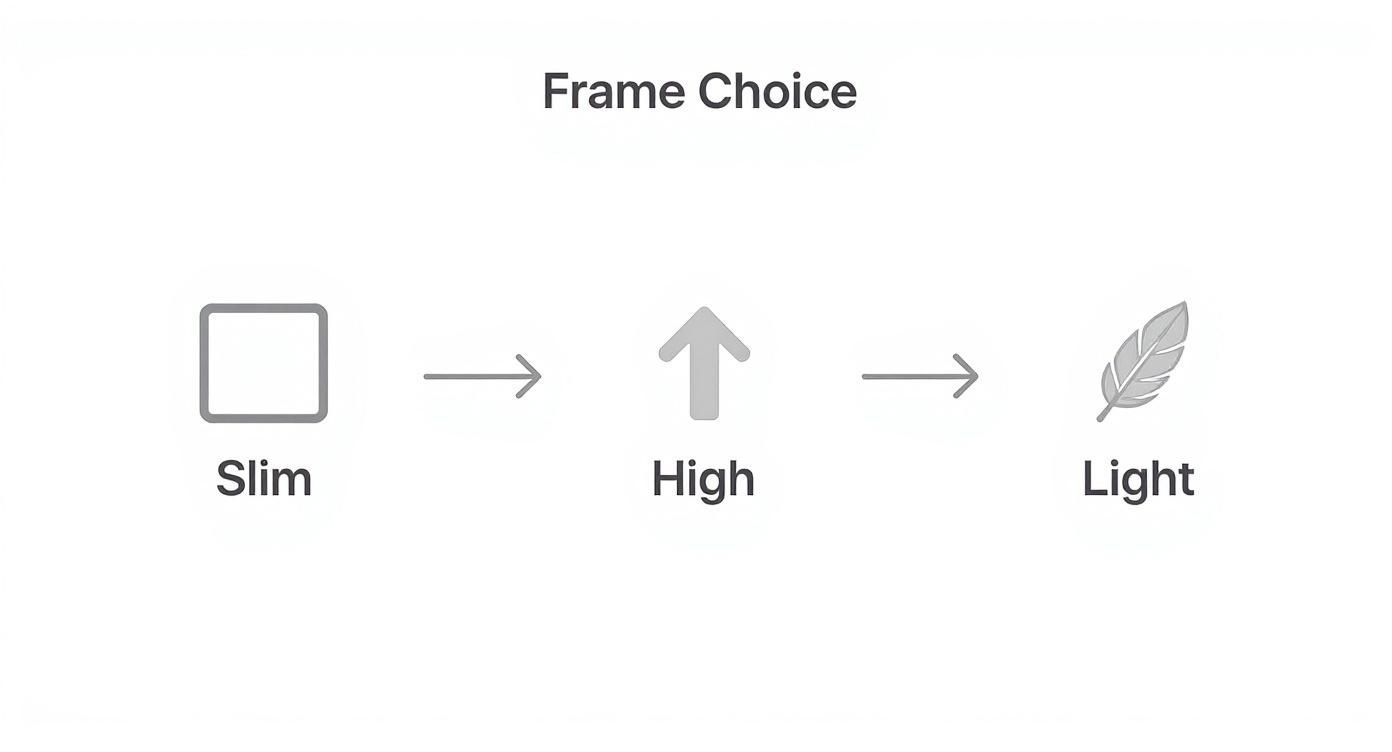
As you can see, the sweet spot is a frame that's slim, tall enough to create vertical interest, and visually light.
One of the best ways to anchor the room is to place the bed against the longest, solid wall. This placement makes the bed an intentional focal point and helps the rest of the room's layout fall into place naturally.
The Painter's Tape Trick
It’s one thing to see dimensions on a screen; it’s another to understand how they feel in your actual space. This is where my favorite designer trick comes in: painter's tape. Once you have the measurements of a bed you're interested in, mark its outline directly on your floor.
This simple exercise gives you a tangible sense of the bed's scale and how much floor space it will actually occupy. You can walk around the taped-off area to test your planned walkways and see if they feel comfortable.
This little bit of prep work is a game-changer. It takes the guesswork out of the equation, ensuring your new bed not only fits but truly enhances the flow and feel of your room. No buyer's remorse, just a perfectly planned space.
Styling with Fabrics and Lighting
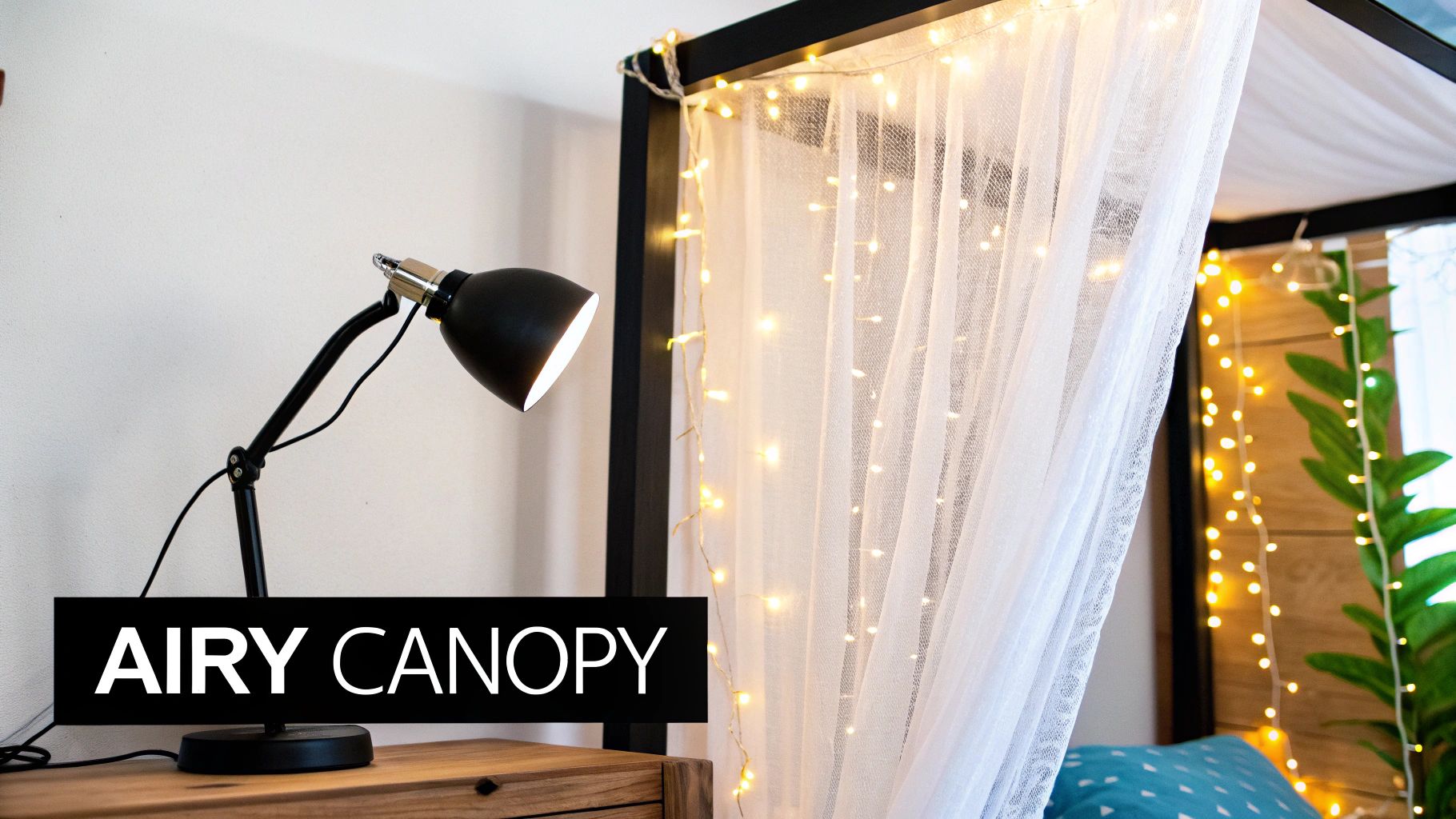
With the frame assembled, you’re ready for the fun part. Styling a canopy bed in a small bedroom is where you get to create a truly magical atmosphere. The goal here isn't to hide the frame but to enhance its beautiful lines with just the right touch of softness and light. This is all about creating an inviting retreat that feels cozy, not cramped.
Choosing the Right Fabrics
Forget heavy, opaque drapes. In a small room, those will instantly create a "box-within-a-box" feeling and make the space feel claustrophobic. You want fabrics that let the light shine through, keeping everything bright and airy.
Sheer materials are your secret weapon. I always recommend these to clients:
- Voile: This stuff is practically weightless and super translucent. It gives you that soft, ethereal look without blocking an ounce of light.
- Linen: For a more relaxed, organic vibe, a sheer linen blend is perfect. It has a bit more texture and works beautifully with minimalist or coastal decor.
- Gauze: If you're going for a dreamy, floating effect, gauze is the answer. It’s incredibly light and adds a layer of serenity to the room.
Color-wise, stick with the light and bright family—think crisp whites, soft creams, or pale, earthy neutrals. These shades bounce light around the room, which is exactly what you need to make the space feel bigger.
Draping Techniques for Small Spaces
You really don't have to drape all four sides to get that classic canopy feel. In a tight space, a little bit goes a long way.
Here are a few simple draping methods I love that add elegance without overwhelming the room:
- Corner Dressing: This is my go-to for small bedrooms. Just tie or loop fabric panels at the four corners of the frame. It adds that perfect touch of softness and draws the eye upward, highlighting the bed's height.
- Headboard Swag: For an even more minimalist look, take one long panel of fabric and drape it over the top rail at the head of the bed. Let the ends cascade down behind your pillows for a simple but stunning focal point.
- Frame Wrapping: Sometimes you don’t need drapes at all! Gently wrapping thin fabric or even string lights around the posts and rails can define the bed's silhouette in a really chic, understated way.
If you’re looking for more ways to pull your room together, we’ve gathered some of the best aesthetic room decoration ideas that will pair beautifully with your new canopy bed.
The trick is to suggest an enclosure, not actually create one. A bit of strategic draping adds that layer of luxury while keeping the open, airy feeling you need in a small room.
Illuminating Your Canopy Bed
The right lighting is the final layer that pulls everything together and sets the mood. Instead of just relying on your main ceiling light, work some lighting directly into the canopy itself for a cozy, layered glow.
Fairy lights or delicate string lights are popular for a reason—they’re magic. Woven through the top rails, they cast a warm, ambient glow that’s both beautiful and functional.
If you need something more practical for reading, a pair of sleek, clip-on lamps attached to the headboard posts are a great solution. They give you focused light right where you need it and free up precious space on your nightstand.
Here's a quick cheat sheet to help you choose the best styling elements for your space.
Table: Fabric and Lighting Choices for Small Bedrooms
| Styling Element | Best for Small Rooms | Avoid in Small Rooms | Pro Tip |
|---|---|---|---|
| Fabric Type | Voile, sheer linen, gauze, cotton muslin | Velvet, brocade, heavy damask, blackout curtains | Look for fabrics labeled "sheer" or "semi-sheer" to maximize light flow. |
| Fabric Color | White, cream, beige, light gray, pastels | Dark colors (navy, black), bold patterns | Light colors reflect natural light, making the room feel larger and brighter. |
| Draping Style | Corner ties, headboard swag, minimal draping | Fully enclosed, heavy swags on all sides | Focus on highlighting the frame's vertical lines to draw the eye upward. |
| Lighting | String lights, fairy lights, clip-on reading lamps | Large, bulky lamps, overhead spotlights | Use warm-toned bulbs (2700K) to create a cozy, inviting ambiance. |
By pairing the right fabric with thoughtful lighting, you can turn your canopy bed into a truly enchanting centerpiece that makes your small bedroom feel special, not squished.
Smart Alternatives for a Canopy Look
So, you love the romantic, dramatic vibe of a canopy bed but just can't commit to a full frame. Maybe you're renting, dealing with low ceilings, or simply don't have the space. Good news: you can still get that dreamy, room-within-a-room feeling with a few clever tricks.
These creative solutions give you the style of a canopy bed in a small bedroom without the bulky footprint. It's a flexible, DIY-friendly approach that’s perfect for adding a personal touch. Interestingly, it seems a lot of people get the itch to update their bedrooms in late summer; online searches for 'canopy bed frame' often see a huge spike in August, hitting a search interest score of 81 out of 100. You can dig into more on consumer interest in canopy bed trends.
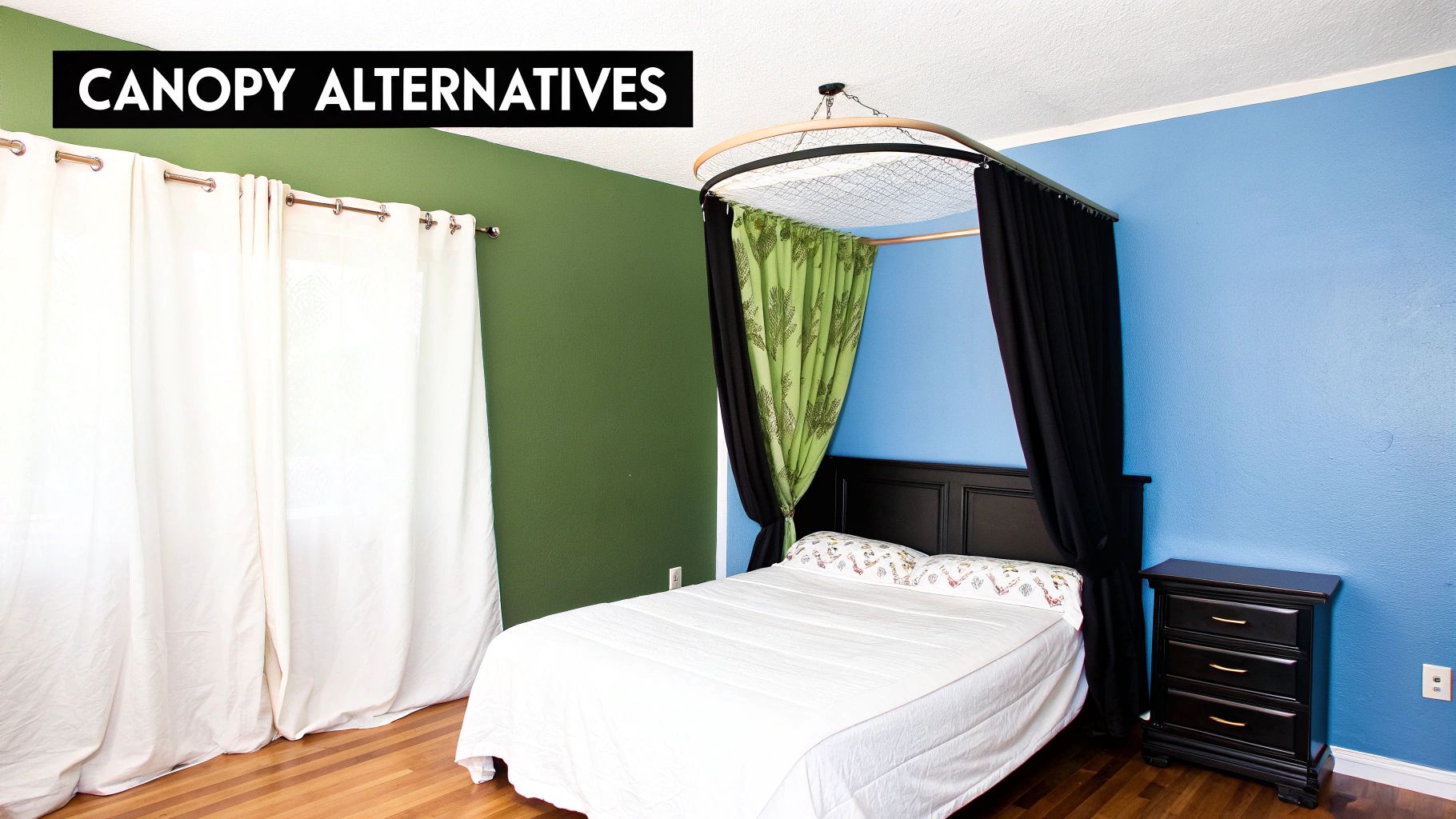
Create a Faux Canopy with Ceiling Mounts
One of the easiest ways to fake it is to work with your ceiling. By installing a few simple fixtures, you can drape fabric beautifully without a single bedpost.
Ceiling-Mounted Curtain Tracks: A lightweight curtain track installed on the ceiling right above your bed is a game-changer. Hang some sheer curtains, and you can draw them closed for a cozy feel or pull them back for a more open look. It’s a surprisingly convincing illusion with minimal hardware.
Decorative Hoops or Rings: For a more bohemian or whimsical vibe, try suspending a large embroidery hoop or even a decorative metal ring from the ceiling. You just need to drape your fabric through the center and let it flow down around the head of your bed. The effect is soft, ethereal, and incredibly easy to pull off.
Pro Tip: Whatever you suspend from the ceiling, make sure it's secure. Always use the right anchors for the weight of your fabric and hardware. When it comes to hanging things over your head, safety is non-negotiable.
Use Wall Fixtures to Mimic a Frame
Your walls can also do the heavy lifting. This strategy is fantastic for framing the head of the bed and creating a strong focal point without crowding the room.
Try mounting two curtain rods high on the wall behind your headboard. Extend them out from the wall a bit, then drape a single long panel of fabric over both to create an elegant, swag-like effect. If you’re going for a more rustic or natural look, you could even mount a beautiful, treated tree branch securely to the wall and drape fabric from there.
The Power of Paint
If you want the absolute most minimalist approach, look no further than a can of paint. You can create the illusion of a canopy by painting a colored rectangle on the wall behind your bed and carrying it right up onto the ceiling.
This clever trick defines your sleeping space and adds a dose of architectural interest without taking up a single inch of floor space. It's a bold, graphic move that looks stunning in modern and eclectic rooms.
Answering Your Lingering Questions
It's one thing to see inspiring photos, but it's another to commit to a piece of furniture as bold as a canopy bed, especially in a snug space. You probably still have a few practical "what ifs" running through your mind. That's completely normal. Let's walk through some of the most common questions I hear from people wrestling with this exact decision.
Day-to-Day Living with a Canopy Bed
First up, the big one: cleaning. Is this thing going to be a giant dust magnet? I'm not going to lie—yes, the top rails will collect dust, much like the top of your armoire or bookshelves. But it's not a dealbreaker.
A quick once-over with an extendable duster once a week is genuinely all it takes to keep the frame looking fresh. If you opt for fabric panels, just plan on laundering them every few months, the same way you would with your window treatments.
What about ceiling fans? This is a huge logistical question. Can you have both a canopy bed and a ceiling fan? Maybe. It all comes down to placement. If your fan is dead center in the room, right where the bed needs to go, a traditional four-poster with connecting top rails is likely out. The last thing you want is a constant thwack-thwack-thwack.
But you still have options. A "posts-only" frame is a fantastic workaround. You get that soaring verticality and drama from the four corner posts without any overhead obstruction.
Style, Height, and Headroom
I often get asked if canopy beds can work in a more masculine or gender-neutral space. Absolutely. We often picture them draped in gauzy, romantic fabrics, but a stripped-back canopy bed is a powerful architectural statement.
Think about a sleek, minimalist metal frame in black or a solid wood frame with clean, unadorned lines. No curtains needed. The focus shifts to the structure itself, creating a look that is both bold and sophisticated.
Then there's the ceiling height question. Is there a magic number you need to hit? Not really, but you do need to be realistic. For a standard 8-foot ceiling, you can absolutely make a canopy bed work.
My rule of thumb is to ensure there are at least 12 inches of breathing room between the top of the frame and the ceiling. This negative space is crucial; it stops the bed from feeling like it's squashing the room.
For lower ceilings, a slim, open-frame design is your best friend. You want to be able to see the ceiling through the frame, which maintains a sense of airiness. If your ceilings are lower than 8 feet, I'd gently guide you toward a "faux canopy" instead, using wall-mounted hardware or even paint to create the illusion without the bulk.
A Few Final Rapid-Fire Questions
Let's tick off a few more common queries that pop up all the time.
- Will it actually make my room feel smaller? It doesn't have to. A dark, heavy, chunky frame can certainly feel oppressive. But a slender frame in a light color or a reflective metal can actually draw the eye upward, creating the illusion of height and making the room feel more expansive.
- How many curtains do I really need? You don't need any! The bare-frame look is incredibly chic. If you do want fabric, you have total freedom. You can hang two panels behind the headboard for a soft backdrop, use four to anchor each corner, or go for eight if you want a fully enclosed, cozy retreat (though this works best in rooms with a bit more square footage).
- Are they a pain to move? Yes, they are definitely heavier and more of a hassle to assemble and disassemble than your average bed frame. Think of a canopy bed as a more permanent fixture. If you're someone who loves to rearrange your room every month or you move frequently, it might not be the most practical choice.
At the end of the day, a canopy bed in a small room is a design choice that, when done right, has a massive payoff. By choosing a frame that complements your room’s scale and being mindful of those little details, you can create an incredible focal point that feels both grand and perfectly at home.
Ready to visualize a canopy bed in your own space? With AiRoom, you can upload a photo of your bedroom and see exactly how different styles will look. Stop guessing and start designing. Create your first room design concept for free on renderroomstudio.com.