December 8, 2025
Bringing Home the Charm of French Provincial Interior Design
Explore the effortless elegance of French Provincial interior design. This guide shows you how to blend rustic warmth with refined style in your own home.
At its heart, a French Provincial interior is a beautiful contradiction. It captures the sun-drenched, rustic charm of the French countryside and blends it seamlessly with the sophisticated elegance you'd find in a Parisian apartment. The goal is to create spaces that feel both refined and utterly livable, where graceful details meet the comfort of a well-loved home.
The Soul of French Provincial Design
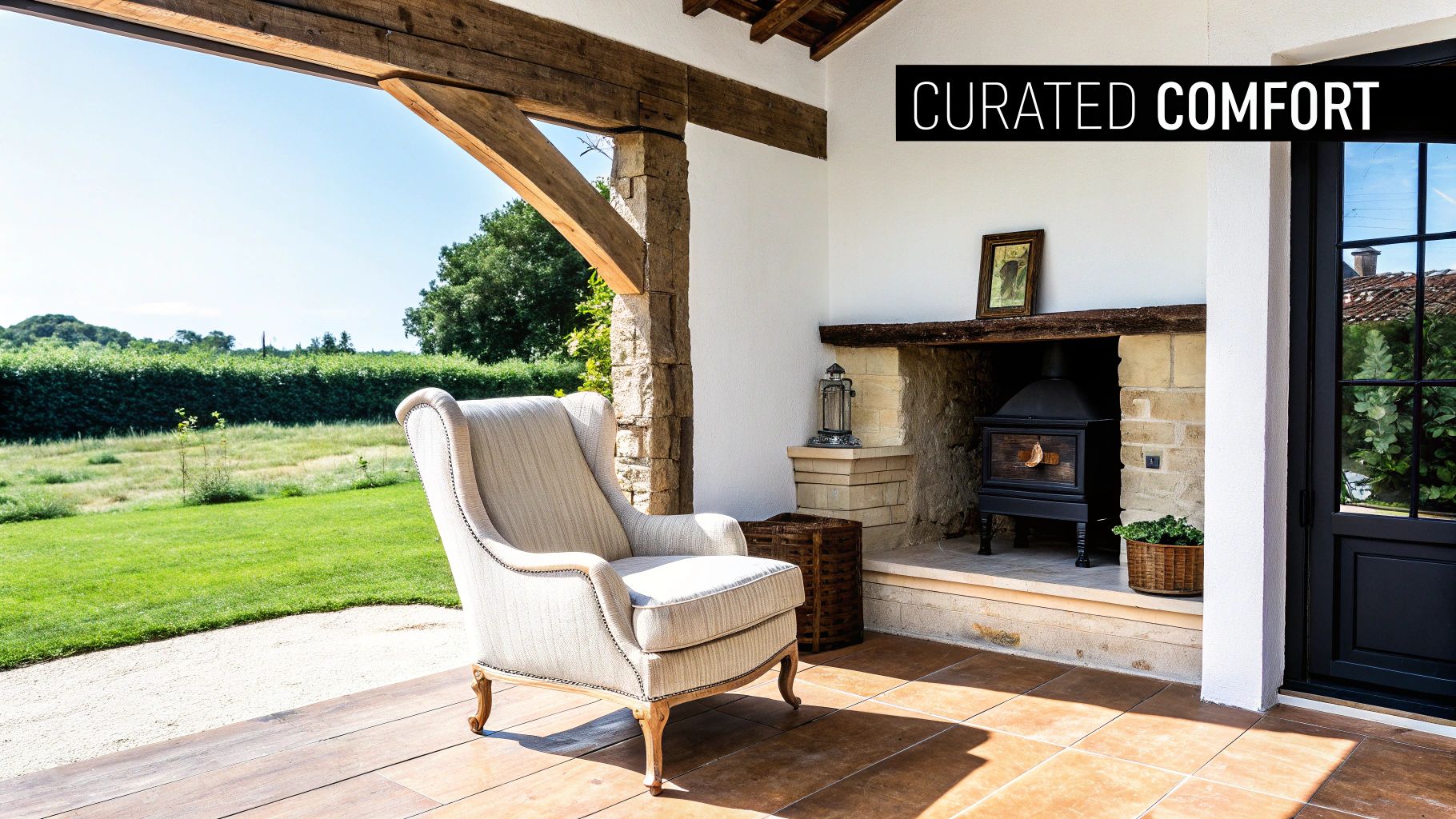
The best way to understand French Provincial style is to think of it as a story of balance. It marries the sturdy, practical spirit of countryside living with the delicate, curved lines that were all the rage in historic French cities.
Imagine a design that sits perfectly between a humble farmhouse and an ornate château—it cherry-picks the best of both worlds. This isn't about cold minimalism or over-the-top formality. It’s about cultivating a feeling of curated comfort, as if every piece was lovingly gathered over generations.
A Style Forged in History
This distinct design language took shape back in the 17th and 18th centuries. It was the countryside's answer to the incredibly lavish styles of the Parisian aristocracy, like the grandeur seen during the reign of King Louis XIV.
Out in the provinces, talented local artisans took inspiration from the ornate royal furniture but adapted it using materials they had on hand. They crafted pieces that were not only beautiful but also built to last. This regional twist is what gives the style its soul, with places like Provence and Normandy lending their unique character to its color palettes and shapes. You can dive deeper into the history of French Provincial design on French Knot's blog.
The core idea is to create an atmosphere of "une vie simple," or "a simple life," but one that's elevated with an unmistakable touch of grace. It’s a design that whispers elegance rather than shouting it.
To help you instantly recognize this aesthetic, I've put together a quick snapshot of its essential characteristics.
The Hallmarks of French Provincial Style
| Element | Description |
|---|---|
| Furniture | Graceful yet sturdy. Think cabriole legs, scalloped carvings, and distressed finishes on pieces built for daily use. |
| Materials | Natural and authentic. Weathered woods like oak and walnut, natural stone floors, and rustic linen textiles are staples. |
| Color Palette | Soft and muted. Inspired by the countryside landscape, it features warm whites, gentle creams, and soft pastels. |
| Atmosphere | A sense of history. The style thrives on patina and character, giving the impression of a home filled with cherished heirlooms. |
These key ingredients work together to create a look that feels deeply personal, timeless, and incredibly inviting.
Mastering the Color and Material Palette
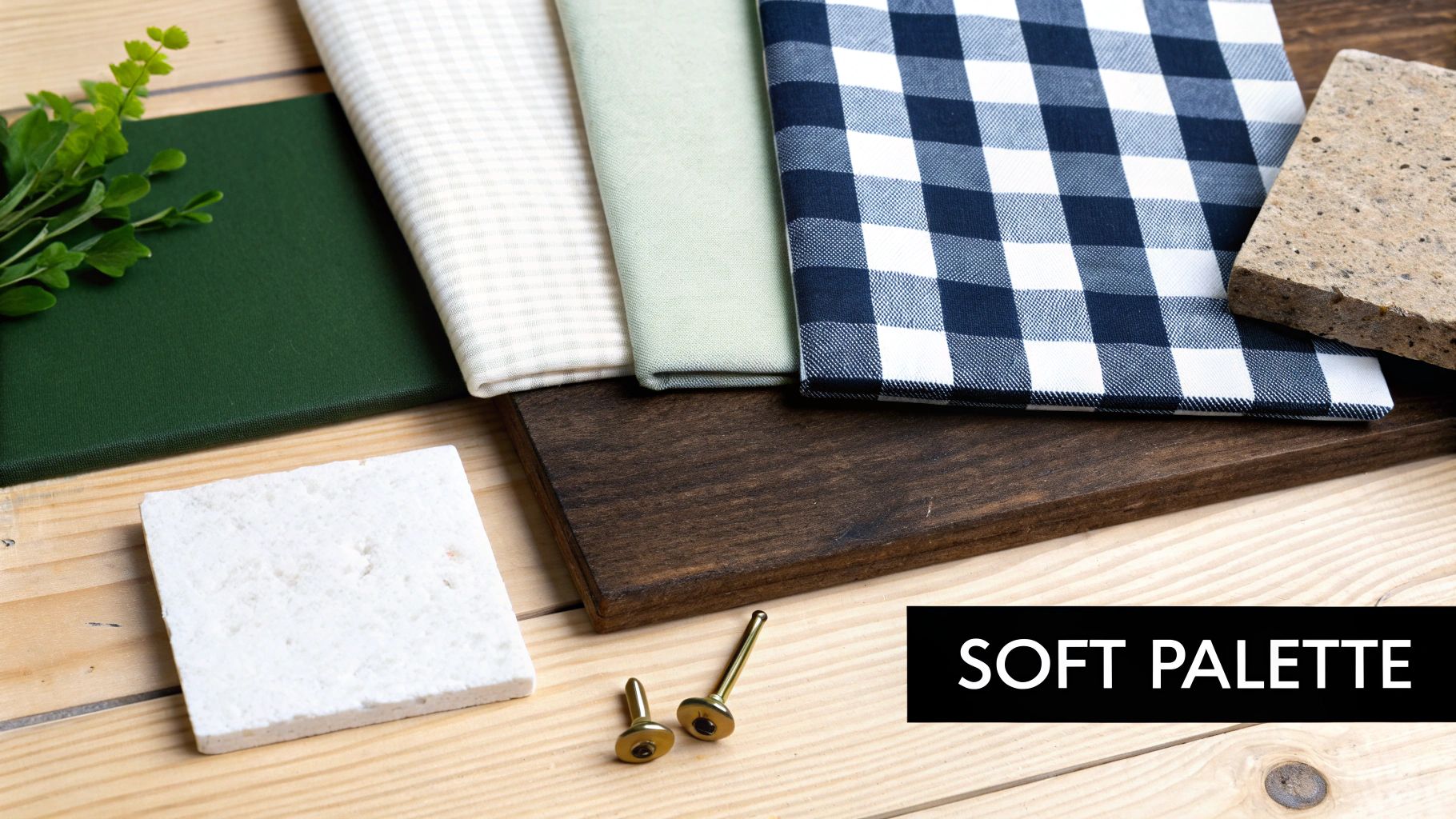
The soul of a French Provincial interior is found in its colors and textures. This isn't a style that shouts for attention with loud, dramatic statements. Instead, it speaks in a soft, sun-faded whisper, drawing its palette directly from the countryside landscape. The whole idea is to create a feeling of light and air, as if the windows have just been thrown open to a gentle breeze.
Think of your foundational colors as a canvas of warm whites and soft, buttery creams. These shades are fantastic at reflecting natural light, which instantly makes a space feel larger and more peaceful. From that base, you can begin to layer in muted pastels, adding quiet depth and personality without ever feeling overwhelming.
Core Colors of the Countryside
The accent colors are subtle and always inspired by nature. You'll want to use shades that feel gentle and lived-in, bringing a bit of the outdoors inside. Forget primary colors; we’re talking about their softer, more sophisticated cousins.
Key accent hues to consider:
- Duck Egg Blue: A soft, grey-blue that’s calming and completely timeless. It’s perfect for cabinetry or a feature wall.
- Gentle Grey: A warm, almost dove-like grey that provides a sophisticated neutral backdrop for furniture and fabrics.
- Pale Ochre: A sun-baked yellow that introduces a touch of rustic earthiness and warmth.
- Faded Sage Green: A muted green that calls to mind provincial herb gardens, adding a fresh yet tranquil note.
These colors are often warmed up with subtle hints of gold or antiqued brass on hardware and mirror frames, which adds just a touch of restrained glamour. It's this careful balance between rustic and refined that really makes the look work. If you're decorating on a budget, exploring some affordable interior design ideas can show you how to source these elements without breaking the bank.
The Importance of Natural Materials
In a French Provincial home, the materials are just as crucial as the color palette. This style demands surfaces that are natural, tactile, and feel like they have a history. Authenticity is everything—you won’t find plastics or high-gloss synthetics here.
Weathered and rustic woods are absolutely essential. Weathered oak, walnut, and various fruitwoods are the go-to choices for everything from floors to those substantial armoires and dining tables. These woods often have a distressed or limewashed finish, giving them a beautiful patina that speaks to age and years of use.
The true magic of this style lies in the interplay of textures. It’s the contrast between a rough-hewn wooden beam, a cool limestone floor, and a soft, crumpled linen throw that creates an environment rich with sensory detail.
Natural stone, especially limestone or terracotta, is a classic choice for flooring in kitchens and entryways. These materials feel cool underfoot and give the home a direct connection to the earth.
Finally, textiles are where you add layers of comfort and tell a story. Rustic, unbleached linen is a staple for curtains and upholstery. Classic patterns like Toile de Jouy—a fabric printed with charming pastoral scenes—add a wonderful narrative touch. Simple checks and subtle florals on cotton or wool complete the look, making the space feel cozy, authentic, and genuinely inviting.
Choosing Timeless French Provincial Furniture
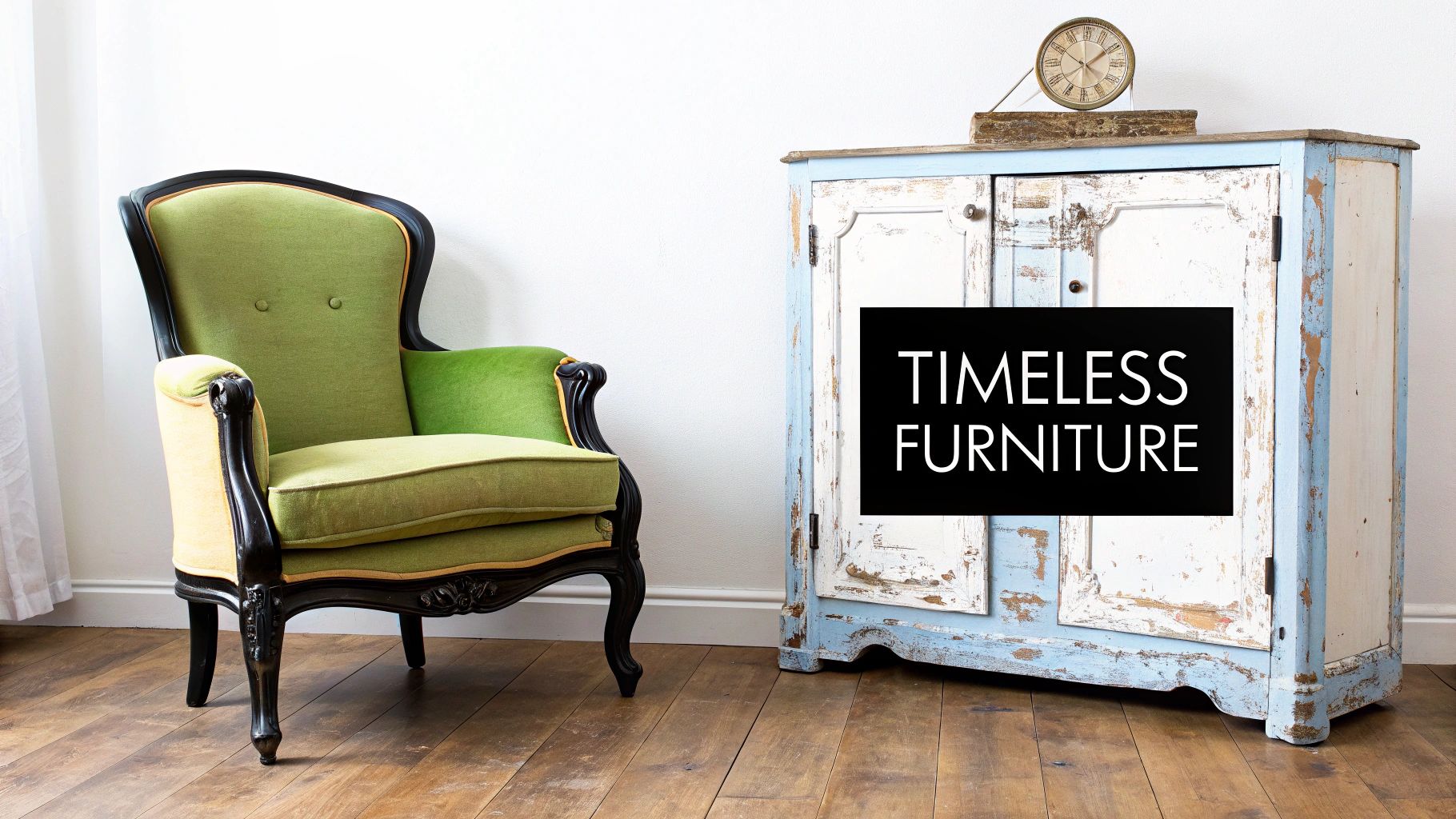
Furniture is the absolute heart of any French Provincial interior. This is where the story of rustic elegance and enduring craftsmanship really comes to life. These pieces are so much more than functional items; they're packed with character, blending sturdy construction with graceful, artistic touches. Think of them as the anchors of your room, setting a tone of relaxed sophistication from the get-go.
You'll spot the style's signature in the small details. Look for the famous cabriole leg, that distinctive, S-shaped curve you see on chairs, tables, and chests. It’s an instant giveaway and adds a touch of refined elegance to even the most robust piece of furniture.
Another key is the finish. Scalloped carvings and hand-painted surfaces, often with a distressed look, are hallmarks of the style. This "imperfect" finish is completely intentional. It gives a piece a sense of history and warmth, as if it's been loved and used for generations.
Identifying Key Furniture Pieces
A few iconic pieces can instantly ground a room in the French Provincial aesthetic. Their designs have a rich history, tracing back to the 18th century when country artisans began adapting the ornate styles of Paris for a more casual rural life. You can learn more about the fascinating historical characteristics of this furniture to really appreciate its evolution.
Here are a few quintessential items to keep an eye out for:
- The Armoire: A large, often commanding wardrobe that offers great storage and acts as a powerful focal point. The best ones have curved tops and beautifully paneled doors.
- The Commode: This is a low chest of drawers, typically with a curvy "serpentine" front and those classic cabriole legs. It's incredibly versatile and looks just as good in a hallway as it does in a bedroom.
- The Bergère Chair: A deep, comfortable upholstered armchair with an exposed wooden frame. It’s the epitome of cozy elegance—perfect for creating a reading nook.
- The Farmhouse Table: A sturdy, often long dining table made from solid wood. It’s the perfect rustic counterpoint to more ornate chairs and decor, bringing everything back down to earth.
The secret to an authentic look is to avoid perfectly matched sets. The real beauty of a French Provincial interior comes from a thoughtful mix of pieces that feel collected over time, not bought from a single showroom floor.
Balancing Ornate and Rustic Elements
The final touch is all about balance. While the ornate details are stunning, piling on too many can make a space feel stuffy or cluttered. The real magic happens when you pair these decorative items with simpler, more rustic farmhouse pieces.
For instance, try surrounding a simple, heavy wooden table with a set of elegantly carved dining chairs. Or place a refined commode next to a sofa upholstered in plain, natural linen. It's this beautiful tension between the elegant and the everyday that makes a French Provincial interior feel so welcoming, authentic, and genuinely timeless.
Layering Decor Accents and Lighting
If your furniture is the skeleton of a French Provincial room, then the decor and lighting are its soul. This is where the magic really happens. These final touches transform a space from a collection of nice things into a place that feels warm, personal, and genuinely inviting. It's not about cluttering surfaces, but about telling a story with objects that feel both elegant and down-to-earth.
Take an ornate, gilded mirror, for example. It's so much more than just a wall decoration. When you place it just right, it acts like another window, bouncing light around and making the room feel bigger and brighter. That touch of gold and intricate carving creates a gorgeous contrast against a weathered wood console table beneath it.
Weaving in Natural Textures
To keep the style from feeling too stuffy or formal, you absolutely need to bring in rustic, natural elements. This is the "country" in "country chic," and it's what gives the design its lived-in, comfortable feel.
Here are a few simple ways to add that crucial texture:
- Rustic Pottery: Think simple earthenware, classic stoneware, or even unglazed terracotta. These pieces bring an earthy, handmade quality that feels authentic. Use them to hold fresh flowers or let them stand on their own as simple, sculptural objects.
- Fresh Botanicals: You can't overdo this one. A vase of lavender, a bouquet of hydrangeas, or even just some fresh greenery clipped from the garden will instantly breathe life and a pop of natural color into the room.
- Layered Textiles: Softness is everything. Imagine flowing linen curtains that puddle slightly on the floor, detailed embroidered cushions tossed on a bergère chair, or a cozy wool throw casually draped over the arm of a sofa. These layers add comfort and so much visual interest.
Crafting the Perfect Glow
Lighting in a French Provincial home is all about creating a warm, ambient glow. You're aiming for an inviting and serene mood, not a bright, sterile operating room. A single overhead light just won't cut it; the secret is to build layers of light from different sources.
The right lighting should feel like a soft, welcoming embrace. It’s the difference between a room that is simply decorated and one that feels like a true sanctuary, encouraging you to relax and stay awhile.
A statement chandelier often serves as the centerpiece. It might be rustic wrought iron or dripping with delicate crystals—either way, it’s a stunning focal point. But don't stop there. Wall sconces, especially those with small fabric shades, cast a beautiful, diffused light that washes the walls in a soft glow.
Finally, add table lamps. Placing them on side tables and commodes creates intimate pools of warm light perfect for reading or quiet conversation. Getting this mix right is the key to creating a truly dynamic space, and you can dive deeper into this by learning how to create depth in your interior design.
Designing Your Home Room by Room
Bringing the French Provincial interior style into your home isn't about following a rigid formula. It's more like adopting a philosophy—a way of creating distinct, beautiful rooms that all feel connected. Think of it as a flexible framework for crafting spaces that are both elegant and genuinely comfortable.
Let's walk through how you can apply these ideas to the most important areas of your home, one room at a time.
The Living Room: An Elegant Gathering Space
The living room should feel like the true heart of your Provincial home, a place that just naturally invites people to sit down, relax, and talk. The secret is to anchor the space with a strong, rustic focal point.
A rough-hewn stone fireplace or a mantel made from distressed timber is a perfect starting point. From there, arrange your seating to encourage conversation—not just to face a screen. Place plush sofas and classic bergère chairs in a way that feels organic, not stiffly staged. Think soft, overstuffed cushions covered in linen or a subtle floral print.
A common mistake is making a living room feel like a showroom. The goal is a space that looks like it has been curated over time, where a refined gilded mirror can hang comfortably above a simple, rustic console table.
Once you have the main pieces, it's all about layering in the details. A weathered wooden coffee table, wrought-iron curtain rods holding flowing linen drapes, and a soft wool rug underfoot will complete the look. The right layout is key to making it all work; check out our guide on furniture arrangement tips for more ideas on creating a balanced space.
The Kitchen: A Rustic and Functional Heart
More than any other room, the French Provincial kitchen is the soul of the home. It’s warm, highly functional, and brimming with charm. The whole aesthetic is rooted in farmhouse practicality but elevated with graceful touches.
Start with cabinetry painted in soft, creamy whites or gentle greys, often with simple paneling and antique brass hardware. A classic centerpiece is a substantial wooden island, which serves as both a workspace and a casual spot for family to gather. You might even leave the island with a natural wood finish to create a lovely contrast with the painted cabinets.
This style's timeless appeal comes from its reliance on natural materials. From timber and stone to classic textiles, these elements have been central to French interior design for centuries. Even when Modernism arrived in the 20th century, this rustic-elegant look never went out of fashion.
To really lean into the farmhouse feel, try adding some open shelving. It's a great way to display charming ceramics, rustic pottery, and everyday glassware, which adds character while keeping essentials close at hand.
The Bedroom: A Serene and Romantic Retreat
When it comes to the bedroom, the goal is to create a peaceful sanctuary that feels both romantic and restful. The focus should be squarely on soft textures, a gentle color palette, and elegant yet understated furniture.
An upholstered headboard in a soft linen or a muted floral toile fabric makes a beautiful focal point. Pair it with high-quality linens in shades of white, cream, or pale pastels, and then add layers with embroidered cushions and a cozy quilt or throw.
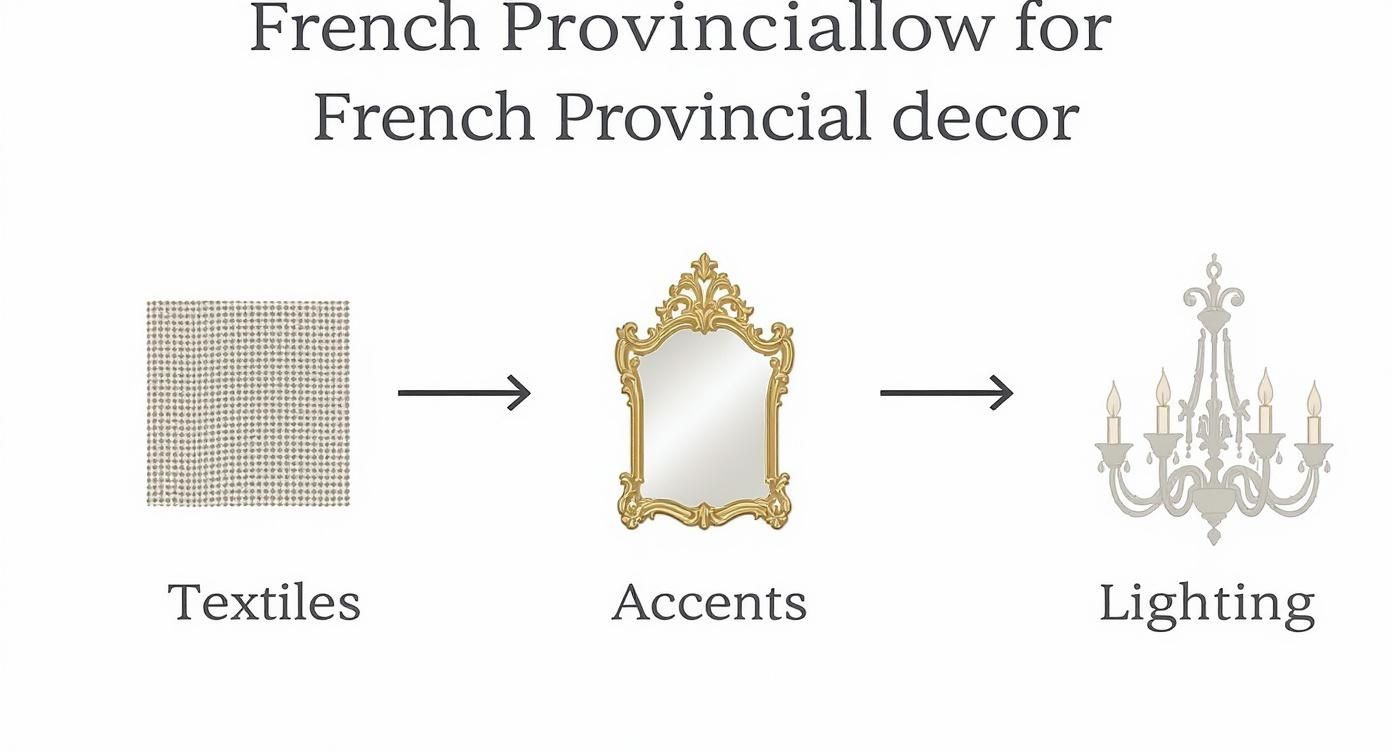
It’s the layering of these key decorative elements—textiles, accents, and lighting—that truly brings the style to life. For furniture, a vintage dressing table or a delicate commode with curved legs adds a touch of grace. A small crystal chandelier can provide the perfect soft, ambient light.
The final result should feel less like a designed room and more like a personal, tranquil escape.
French Provincial FAQs: Your Questions Answered
When you start exploring French Provincial design, a few questions tend to pop up again and again. It’s an aesthetic full of beautiful subtleties, and getting a handle on the finer points is what separates a good room from a truly great one.
Let's walk through some of the most common queries. Think of this as a quick chat with a designer to clear up any confusion and help you bring this style home with confidence.
What’s the Difference Between French Provincial and French Country?
This is, without a doubt, the number one question I get asked. The two terms are thrown around so often that they’ve almost merged, but there’s a real distinction.
Think of French Country as the big, warm, rustic umbrella. It’s the charming, unpretentious farmhouse style you’d find deep in the French countryside—think sturdy farm tables, simple pottery, and a cozy, lived-in feel. It’s all about a connection to the land.
French Provincial is a specific style under that umbrella. It’s what happened when the affluent residents of the provinces (hence the name) started admiring the ornate styles of Paris and wanted a touch of that elegance in their own country homes. It takes the honest, rustic soul of French Country and adds a layer of refined, aristocratic grace.
You really see the difference in the details. A classic French Country room might have a simple, rough-hewn beam ceiling. The French Provincial version might have that same ceiling, but below it sits a set of dining chairs with graceful, curved cabriole legs and a hint of carving. It's country, but with an uptown sensibility.
So, to put it simply: all French Provincial design is rooted in French Country, but not all French Country has that extra dash of sophistication that defines French Provincial.
Can French Provincial Actually Work in a Modern Home?
Absolutely. In fact, it's one of my favorite combinations. When you blend the warmth of French Provincial with clean, modern lines, the result is stunning—a space that feels both timeless and completely current.
The secret? It all comes down to balance and restraint. You’re not trying to create a historical reenactment. Instead, you're creating a conversation between old and new.
Start with a modern canvas—maybe a neutral color palette and simple architectural details. Then, carefully bring in key French Provincial elements to act as the stars of the show.
Here are a few ways to nail the look:
- Create a Focal Point: Place a beautifully ornate, weathered commode or a glittering crystal chandelier in an otherwise minimalist living room. The contrast is electric.
- Mix Up the Seating: Surround a rustic, plank-top dining table with sleek, modern chairs. This keeps the space feeling fresh and unexpected.
- Play with Textures: Imagine a classic, plush bergère chair with its soft curves. Now, place it next to a simple, clean-lined side table and hang a piece of abstract art above it. Perfection.
This approach lets each style shine, creating a home that feels curated, deeply personal, and anything but one-note.
What are the Common Mistakes to Avoid?
It’s easy to get carried away, but achieving that signature relaxed elegance means sidestepping a few common traps.
The biggest mistake is going overboard. French Provincial is about curated charm, not a museum replica. Resist the urge to cram every corner with gilded mirrors, intricate carvings, and toile fabric. The result feels cluttered and stuffy, not chic. One or two statement pieces are far more powerful than twenty.
Another classic blunder is buying a matching furniture set. The heart of this aesthetic is the feeling that a room has been assembled over time. A bedroom where the armoire, bed, and nightstands are all a perfect match instantly kills that authentic, collected vibe.
Finally, don’t forget about texture! A room full of smooth, shiny surfaces will feel cold and lifeless, completely missing the point of a French Provincial interior. The magic happens in the interplay of materials—the roughness of weathered wood against soft linen, the coolness of stone, the rustic glaze on a piece of pottery. This is what breathes life and warmth into the space.
Where Can I Find Authentic Furniture and Decor?
Sourcing the right pieces is half the fun—it’s a real treasure hunt.
For genuine antiques that have a story to tell, your best bet is to hit up local antique shops, weekend flea markets, and reputable online marketplaces that vet their vintage dealers. These are the places where you’ll find those one-of-a-kind pieces with true character.
If you’re looking for high-quality reproductions, many fantastic furniture makers specialize in classic European design. The key is to look for solid wood construction and hand-finished details that honor the original craftsmanship. For decor, browse specialty home boutiques, estate sales, and even larger retailers that have curated vintage-inspired collections. Always prioritize quality and character over quantity—it’s the secret to capturing the style’s enduring spirit.
Ready to see how a French Provincial interior could look in your own home? With AiRoom, you can stop guessing and start visualizing. Just upload a photo of your room to generate stunning design ideas in seconds, play with different furniture layouts, and refine your vision until it’s perfect. Explore endless variations and create polished renders at https://www.renderroomstudio.com.