December 3, 2025
Virtual Staging for Real Estate to Sell Homes Faster
Discover how virtual staging for real estate transforms listings. This guide covers the ROI, process, and best practices to sell properties faster.
Let's be honest, the journey to a new home almost always starts with a scroll. Before buyers ever set foot in a property, they're swiping through hundreds of photos online, making snap judgments in seconds. This is where real estate agents hit a common, and frustrating, wall: the empty room problem.
So, what is virtual staging? It’s the art of digitally adding furniture, decor, and other stylish touches to photos of empty or outdated properties. It takes an uninspired, vacant space and transforms it into a warm, inviting scene that helps a buyer see it not just as a house, but as their future home. The result? Faster sales and better offers.
How Virtual Staging Is Changing the Real Estate Game
An empty property doesn't do itself any favors. It often looks cold, sterile, and—worst of all—smaller than it really is. When buyers see bare walls and floors, it's hard for them to connect emotionally. They're left trying to imagine where their couch would fit or how a room could feel with their own things in it. Most can’t make that mental leap and just keep scrolling.
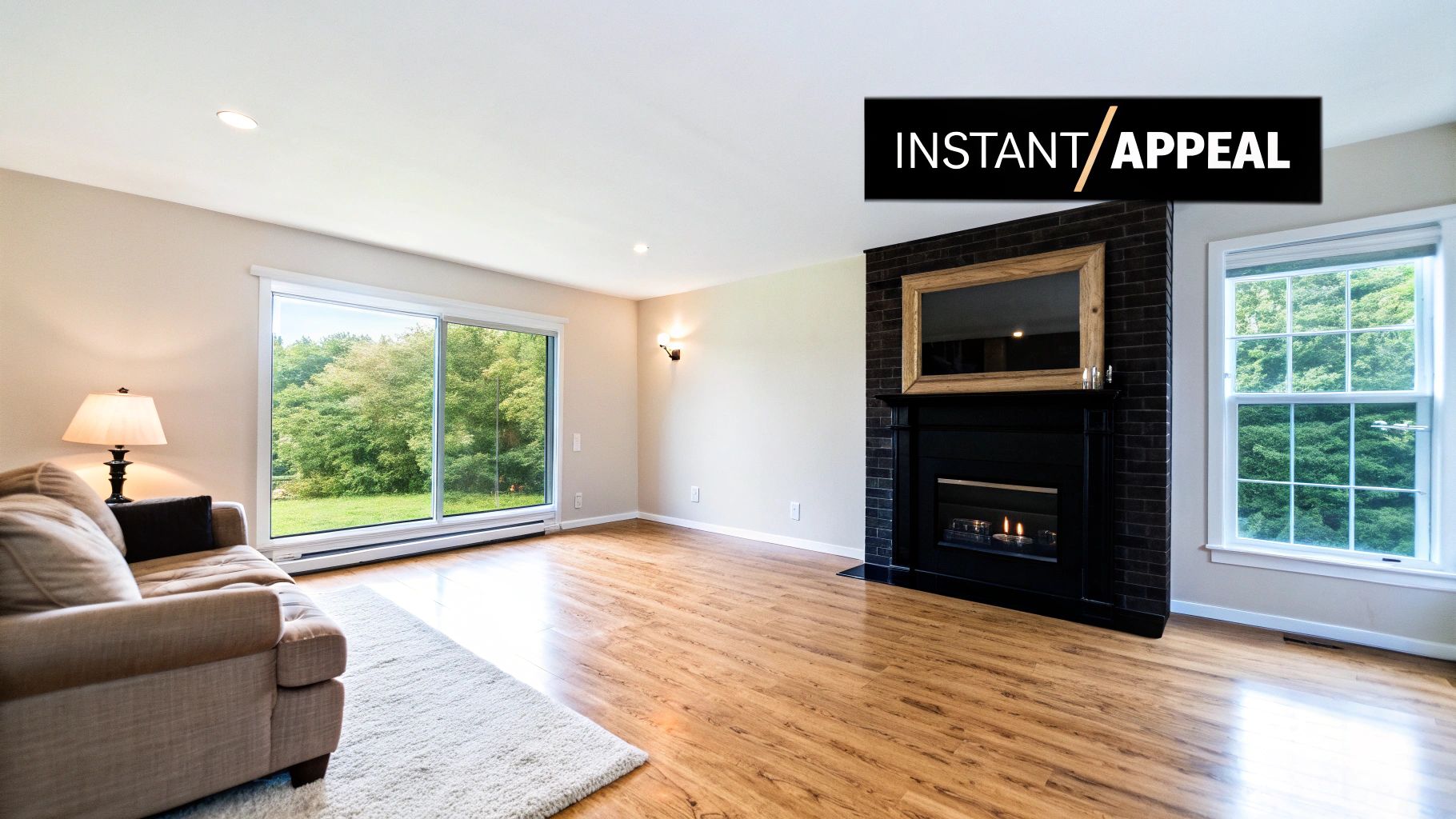
This is precisely the challenge virtual staging was designed to solve. It’s not just about prettying up a picture; it’s a powerful marketing strategy that lets you control a buyer's first impression. Instead of hoping they see the potential, you show it to them.
A Smart Answer to How People Buy Homes Today
Virtual staging is so effective because it directly addresses how modern buyers think and shop. Here’s how it works its magic:
- It creates an emotional spark: Furnished rooms help buyers picture their own lives unfolding in the space. That’s how you turn a listing into a home they can't stop thinking about.
- It clarifies scale and purpose: Staging instantly shows how big a room is and how it can be used. That awkward spare bedroom? Suddenly, it’s a perfect home office or a cozy nursery.
- It stops the scroll: In a sea of online listings, beautifully staged photos grab attention. They demand a closer look, leading to more clicks, saves, and serious inquiries.
The numbers tell the story. This technology is now a core part of modern property marketing. As of 2025, more than half of all real estate professionals are using virtual staging. That's a huge jump, and it shows a massive industry shift. Meanwhile, traditional physical staging has seen its popularity drop from 39% in 2017 to just 19% today, proving that digital is the new standard. You can learn more about the latest real estate trends and how they're shaping the market.
Virtual staging has moved from a "nice-to-have" gimmick to a competitive must. It gives agents the power to showcase every property at its absolute best, which directly impacts how buyers feel—and what they're willing to pay.
By turning a blank canvas into a compelling vision, virtual staging has become an indispensable tool. It gives savvy agents and sellers a real edge, helping them secure faster sales at top dollar. In this guide, we'll break down exactly how it works and why it delivers such a fantastic return on investment.
How Does Virtual Staging Actually Work?
It might sound like some kind of digital wizardry, but virtual staging is actually pretty straightforward once you peel back the layers. Think of it less like a tech trick and more like hiring a digital interior designer—one who can furnish a property in any style you can dream up, without a single moving truck in sight. It’s all about blending great photography with smart design software to create images that truly pop.
The whole point is to take an empty, uninspiring room and turn it into a warm, inviting space. Instead of hoping buyers can imagine where their couch might go, this technology does the heavy lifting for them. It helps them feel a connection to the space the second they see the photo.
The Core Process: From Blank Canvas to Dream Home
So, how do you get from a bare room to a beautifully staged photo? It's a team effort between a skilled photographer and a digital designer, often with a little help from powerful AI. The process is designed to be surprisingly simple for the real estate agent or seller.
Here's how it usually breaks down:
Start with Great Photos. You can't build a great staged image on a bad photo. Everything starts with clear, well-lit, high-resolution pictures of the empty rooms. I always recommend using a professional real estate photographer; they know all the tricks for capturing the right angles and lighting to create the perfect digital canvas.
Upload to a Staging Service. Once you have your photos, you upload them to a virtual staging platform or send them off to a design agency. This is where the real transformation kicks off. The provider will look over the images, taking note of the room's size, where the light comes from, and any unique architectural details.
Choose a Design Direction. Now for the fun part: picking a style. Are you going for a clean, minimalist vibe? Or maybe a cozy modern farmhouse feel? You can pick an aesthetic that not only fits the house but also speaks directly to your ideal buyer. For a little creative fuel, you can find inspiration in our guide to popular interior design concepts.
Digital Furnishing and Rendering. This is where the magic happens. Using sophisticated 3D modeling software, designers or AI algorithms start placing digital furniture and decor right into your photo. They pull from huge virtual catalogs, making sure every piece—from the rug to the lamp on the end table—is scaled perfectly. The real secret sauce is replicating the room's natural lighting and shadows, which is what makes the digital items look like they're really there.
The key to effective virtual staging isn't about deception; it's about inspiration. The aim is to showcase a property's true potential, helping buyers see not just what the home is, but what it could be for them.
This meticulous attention to detail is what makes professional results look so convincing. The final, polished images are then sent back to you, ready to grab a buyer's attention and stop their scroll.
Human Designers and AI: A Powerful Partnership
In the world of virtual staging for real estate, there are a couple of ways to tackle the design work: you can have a human do it, or you can let AI take a crack at it. Honestly, the best services today are using a hybrid approach, getting the best of both worlds.
- AI-Powered Staging: Platforms like AiRoom can whip up multiple design ideas in just a few minutes. The AI scans the room, understands the space, and suggests furniture layouts based on the style you picked. It’s incredibly fast and gives you a ton of creative options right out of the gate.
- The Human Touch: Often, a human designer will then step in to review and tweak the AI's work. They'll make sure the scale is just right, the lighting looks natural, and the overall design tells a story that makes sense for the home.
This tag-team approach gives you the speed of technology combined with the artistic eye of a professional. The result? A stunningly realistic image that feels both aspirational and authentic, giving your listing the competitive edge it needs.
The Financial Case for Staging Your Property Virtually
https://www.youtube.com/embed/iV06dRNKiHo
When you’re selling a property, every dollar matters. Traditional home staging has been the gold standard for a long time, but let's be honest—the high costs can take a serious bite out of your final profit. This is where virtual staging for real estate really shines, not just as a cool marketing trick but as a smart financial strategy.
Think about it. Instead of shelling out thousands for furniture rentals, movers, and designer fees, virtual staging gives you a high-impact, low-cost alternative. It digitally transforms an empty room into a warm, inviting home right where buyers are looking first: online. And with 97% of buyers starting their property hunt on the web, that first digital impression is everything.
This isn’t just about saving a few bucks upfront. It’s about getting a much bigger return on a much smaller investment. The numbers don't lie.
Direct Cost Comparison: Virtual vs. Physical
Let’s get down to the brass tacks of what you're actually paying for. Physical staging is a logistical beast. You’re not just renting a couch; you’re paying for the stager's time, the delivery crew, the pickup crew, and sometimes even storage fees if the house sits on the market longer than expected.
Virtual staging cuts out almost all that overhead. The cost is simple: a flat fee per photo. This gives agents and sellers complete control over their budget while still creating that high-end look that stops online scrollers in their tracks.
Here's a key advantage: scalability. You could virtually furnish an entire five-bedroom house for less than it costs to physically stage a single living room. That means you can maximize the visual appeal of your entire listing without draining your budget.
This simple workflow shows just how efficient the process is.

It’s a streamlined path from professional photos to beautifully designed, staged images—all done quickly and affordably.
Understanding the Massive ROI Potential
The real magic of virtual staging is its incredible return on investment (ROI). While any staging is better than none, the digital route delivers returns that traditional methods just can't compete with. Why? Because your initial spend is tiny, but the effect on the sale price and timeline is huge.
The financial upside is pretty staggering. Virtual staging can generate an ROI anywhere from 500% to a mind-blowing 3,650%. Compare that to the ROI for traditional staging, which typically falls between 102% and 909%. With costs often as low as $20 per image, you can even showcase different design styles or tweak the look based on buyer feedback without the massive expense of swapping out real furniture. You can find more of these powerful real estate statistics on virtualstaging.com.
To really bring this home, let’s look at a side-by-side comparison of the costs and logistics for an average 3-bedroom home.
Virtual Staging vs. Physical Staging: A Cost and ROI Comparison
| Metric | Virtual Staging | Physical Staging |
|---|---|---|
| Upfront Cost | $200 - $500 (for 8-10 images) | $2,500 - $7,000+ (for 3-month rental) |
| Turnaround Time | 24 - 48 hours | 1 - 3 weeks |
| Flexibility | Unlimited styles, easy revisions | Limited to available inventory, costly changes |
| Logistical Hassle | None (just requires photos) | High (movers, designers, scheduling) |
| Typical ROI | 500% - 3,650% | 102% - 909% |
Looking at the table, the financial and practical advantages become crystal clear. Virtual staging isn't just cheaper; it's faster and far more flexible, giving you a serious edge in today's market.
How Virtual Staging Protects Your Bottom Line
Beyond the immediate savings and impressive ROI, virtual staging protects a seller’s profit in another critical way: by cutting down on carrying costs. Every day a property sits on the market, it costs money—mortgage payments, property taxes, insurance, utilities. Those expenses add up fast.
Because virtually staged homes make such a strong first impression online, they attract more attention, lead to more showings, and ultimately, bring in faster offers. By helping to reduce the number of days a property is on the market, virtual staging directly cuts down on those painful carrying costs. It’s a savvy business move that helps sellers keep more of their hard-earned equity.
Selling Your Home Faster with Virtual Staging
In real estate, the clock is always ticking. For every day a house sits on the market, the seller is paying for the mortgage, taxes, and upkeep. The name of the game is finding the right buyer—and fast. This is where virtual staging for real estate has become a secret weapon for shrinking the sales timeline.
Think about it from a buyer's perspective. An empty home online is just a box with walls. It's hard to get excited about, and even harder to imagine your life happening there. Buyers will scroll right past vacant rooms because they feel cold and lack any sense of scale or purpose.
By digitally furnishing these empty spaces, you’re not just adding furniture; you're adding a story. You transform a sterile listing into an inviting home, helping buyers instantly see themselves cooking in the kitchen or relaxing in the living room.
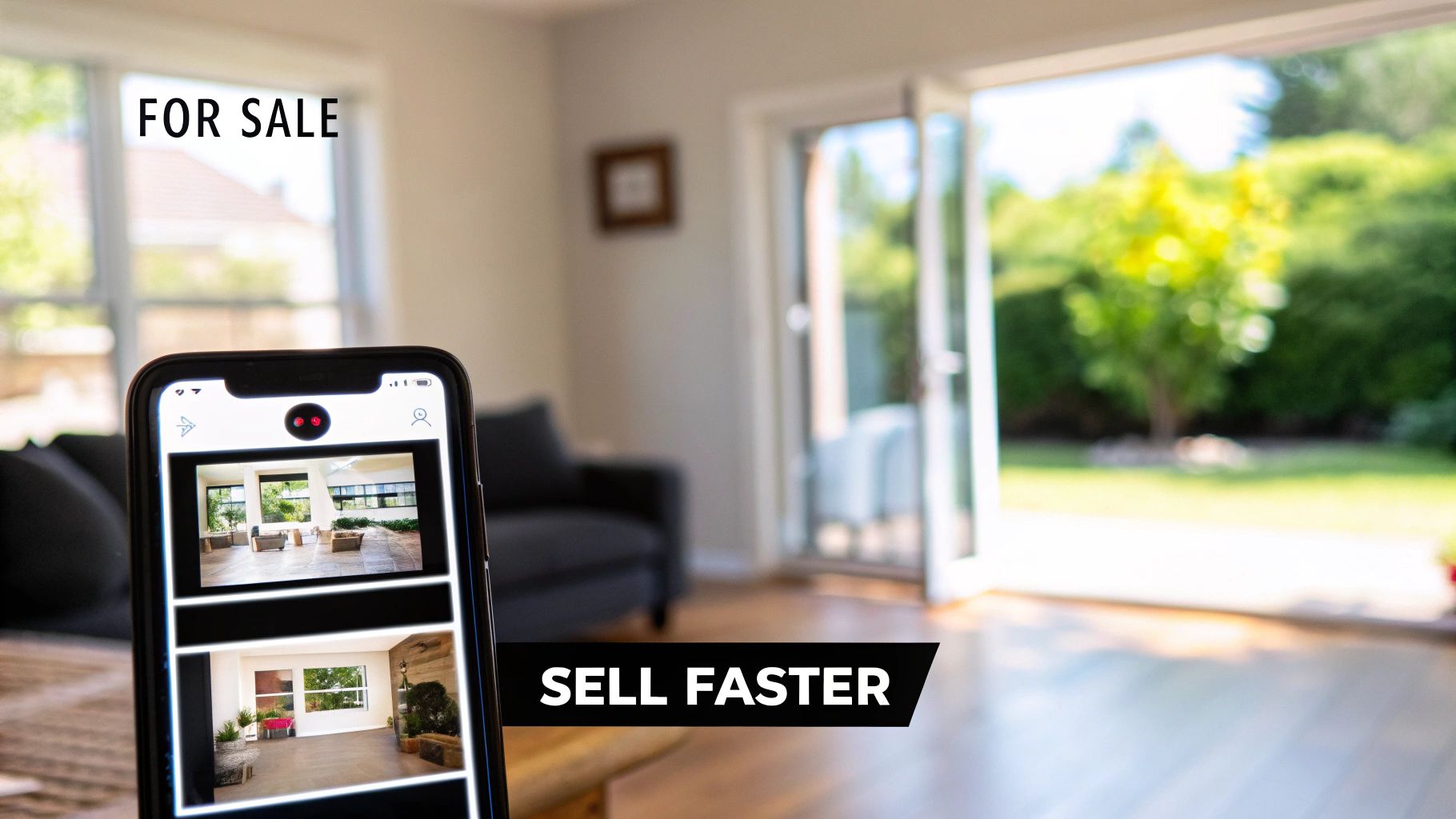
That emotional connection is powerful. A beautifully presented property grabs a buyer's attention, gets more clicks, and ultimately leads to more showing requests from people who are genuinely interested.
The Psychology of a Quick Sale
A quick sale almost always comes down to one thing: a buyer's ability to picture themselves living in the house. Virtual staging is the bridge that closes that "visualization gap," starting from the very first picture they see online.
Here’s a classic example I’ve seen time and again. A perfectly good three-bedroom house sits on the market for 90 days with barely a nibble. The photos are just empty rooms that feel small and uninspired. The agent decides to try virtual staging, and suddenly the listing photos show a warm, stylish living room, a functional home office, and a charming kid's bedroom.
Almost overnight, online views spike, the phone starts ringing for showings, and an offer comes in. This isn't magic. It's the direct result of showing buyers the property's true potential. You can see just how dramatic these changes are in our gallery of home staging before and after transformations.
When buyers can easily see how their lives fit into a space, they move from casual window shopping to serious consideration.
Cutting Down Days on the Market
The effect virtual staging has on a property's time on the market isn't just a theory; the numbers back it up. Homes that are staged—physically or virtually—consistently sell faster than empty ones because they create a far more compelling first impression online.
A strong digital first impression is the key to minimizing days on the market. Virtual staging ensures your property stands out, attracting more qualified buyers and generating the momentum needed for a fast and profitable sale.
This boost in appeal leads directly to a shorter sales cycle. In fact, some studies show that virtually staged properties can cut the average time on the market by as much as 73%. Imagine turning a typical 90-day listing period into just 24 days. That means fewer carrying costs for the seller and a much quicker path to closing the deal.
By putting a little thought into your visual marketing upfront, you create a listing that doesn't just sit there—it sells. It's a strategic move that captures a buyer's imagination from the get-go and sets the stage for a fast, successful sale.
Getting the Best Sale Price for Your Property
Of course, a quick sale is great, but the real goal is always to get the highest possible price. This is where virtual staging for real estate really shines. It’s not just about making a place look pretty; it's a strategic tool for boosting a property's perceived value in the eyes of a buyer.
Think about it: an empty house can feel like a blank canvas, but it can also feel like a project. Buyers start wondering what’s wrong or struggle to imagine how their own furniture would fit. A well-staged home, on the other hand, feels complete. It feels aspirational. Most importantly, it feels like a place someone could move into tomorrow. That first impression is incredibly powerful, shifting the property from just another listing to a premium home and encouraging buyers to come in with stronger, more confident offers.
Elevating Perceived Value to Drive Higher Offers
Perceived value is that invisible force that can add thousands of dollars to a final sale price. When buyers see a thoughtfully designed room, they aren't just looking at furniture; they're picturing a lifestyle they want to be part of. Virtual staging builds that emotional bridge, making the home feel far more valuable than a similar empty property just down the street.
That emotional connection can be the tipping point between a lowball offer and a bid that hits—or even sails past—the asking price. It changes the buyer's internal monologue from, "What needs to be fixed?" to, "I can absolutely see myself living here." That mental shift is exactly where sellers see the biggest impact on their bottom line.
The numbers back this up. According to industry data, nearly three out of ten agents (29%) reported that staging resulted in a 1% to 10% increase in the dollar value of offers. Some studies suggest an even bigger jump, with virtually staged homes potentially selling for 5% to 20% more than their non-staged counterparts. You can dig into these findings on home staging's impact yourself to see how it affects sale prices.
The money spent on virtual staging isn't really an expense. It's a strategic investment designed to maximize the return on what is likely your most valuable asset. When you present a home at its absolute best online, you set a higher anchor price in a buyer's mind right from the start.
This proactive approach doesn't just help justify your asking price; it often creates a more competitive environment with multiple bidders.
A Case Study in Profitability
Let's walk through a real-world example to see how this plays out.
Picture a three-bedroom home listed for $500,000. It's vacant, and the listing photos show clean but cold, empty rooms. It's getting some clicks, but the offers just aren't coming in.
The seller decides to invest $300 to virtually stage the key areas: the living room, primary bedroom, and kitchen. The new photos go live, showcasing a modern, inviting space that truly highlights the home's best features.
Here's the likely outcome of that small decision:
- Increased Interest: The professionally staged photos grab more attention online, leading to a surge in tour requests.
- Stronger Offers: Instead of offers trickling in below asking, the seller now has multiple bids to consider.
- Higher Sale Price: The competition drives the price up, and the home sells for $525,000—a 5% increase over the original list price.
In this scenario, a simple $300 investment generated an extra $25,000 in profit. This proves a fundamental truth in real estate: exceptional presentation isn't a cost—it's a high-return investment strategy that pays for itself many times over.
Best Practices for Using Virtual Staging Effectively
When it comes to virtual staging for real estate, just dropping digital furniture into a photo won't cut it. The real magic lies in creating a vision—a believable, aspirational space that potential buyers can instantly connect with. Getting this right takes a thoughtful approach that blends good design with genuine authenticity.
The whole process starts and ends with the quality of your original photos. This is why professional photography is absolutely non-negotiable.
High-resolution, well-lit images give you the clean, crisp canvas you need for virtual elements to look like they truly belong. If you start with dark, blurry, or awkwardly angled shots, even the most sophisticated digital furniture will look out of place and fake, which completely defeats the purpose. A good real estate photographer knows how to capture a room's best features—its light, scale, and depth—setting you up for a stunning final result.
Match the Style to the Buyer
With great photos in hand, your next move is to choose a design style that tells the right story. This isn't about your personal favorite look; it's about getting inside the head of the target buyer for that specific property. The aim is to create a look that feels both aspirational and completely achievable, helping them forge an emotional connection.
Think about who you're trying to reach:
- Downtown Condo: A sleek, modern, or minimalist vibe is perfect for a young professional.
- Suburban Family Home: Go for warm, inviting styles like transitional or modern farmhouse to create a cozy feel.
- Luxury Property: The decor should reflect the home's value, so think high-end, sophisticated, or classic contemporary.
By tailoring the digital decor, you help buyers see their own lives playing out in the space. It’s a powerful way to turn a listing into someone’s future home.
Uphold Transparency and Ethics
Virtual staging is a fantastic marketing tool, but trust is your most valuable asset. That’s why being upfront and honest is crucial. Full disclosure is key—you have to let people know the images are digitally furnished to avoid any confusion or letdown when they see the property in person.
Always disclose that images have been virtually staged. A simple watermark or a clear note in the listing description—like "Photo is Virtually Staged"—is all it takes to maintain credibility and keep the buyer's experience positive.
A great way to do this is by including both the beautifully staged photos and the original empty-room shots in your listing. This lets buyers dream about the possibilities while still seeing the home's true condition. And remember, never use virtual staging to cover up physical flaws like wall cracks or floor stains. The goal is to highlight potential, not to mislead.
Finally, resist the urge to go overboard with digital clutter. A room stuffed with too much virtual furniture can feel small and overwhelming. Stick to the essentials that define the space and create a natural flow. If you need some inspiration, check out these practical furniture arrangement tips for creating layouts that look both stylish and realistic.
Common Questions About Virtual Staging
As virtual staging becomes a go-to tool in real estate marketing, a lot of the same questions pop up from agents and sellers. Let's clear the air and tackle some of the most common ones so you can decide if it's the right move for your listing.
Is Virtual Staging as Effective as Physical Staging?
The short answer? Yes. But it’s a bit more nuanced than that. Think about where almost every single home search starts today: online. Virtual staging is designed to win that crucial first impression on the screen, which is arguably where it matters most.
It accomplishes the exact same goal as physical staging—helping buyers see themselves in the space—but with a ton more flexibility and at a fraction of the cost. While you can't beat the in-person feel of a physically staged home, the sheer affordability of virtual staging means you can show off a few different styles to attract a wider net of buyers. It's a smart, modern marketing play.
How Much Does Virtual Staging for Real Estate Cost?
This is where the difference becomes crystal clear. Traditional staging is a significant investment, often running into thousands of dollars when you factor in furniture rentals, movers, and a designer's time.
With virtual staging, you're usually paying per photo. Prices typically fall somewhere between $20 to $100 per image, depending on who you work with and how complex the job is. You can digitally furnish an entire home for less than it costs to physically stage a single room. The savings are massive.
Do I Need to Disclose My Photos Are Virtually Staged?
Absolutely, and you definitely should. Transparency is everything in this business. Not only is it the right thing to do, but most MLS platforms and real estate boards actually require you to disclose that the images have been digitally furnished.
It doesn't have to be complicated. A simple, visible note like "Virtually Staged" or "Some images have been digitally furnished" on the photos is perfect. This keeps you ethical, builds trust, and avoids any awkward conversations down the line.
What Kind of Properties Benefit Most?
Vacant homes are the number one beneficiary. Empty rooms just look cold and small in photos, making it tough for buyers to emotionally connect or even figure out if their sofa will fit. Virtual staging turns that blank canvas into a warm, inviting home.
It's also a game-changer for a few other scenarios:
- New construction that needs a touch of personality to feel less like a worksite.
- Homes with outdated decor that could use a modern refresh to show buyers what's possible.
- Properties with awkward layouts where furniture placement isn't obvious.
Ready to turn those empty listings into homes buyers can't wait to see? With AiRoom, you can create beautiful, realistic design concepts in just a few minutes, helping you close deals faster and for more money. See how it works by visiting https://www.renderroomstudio.com.